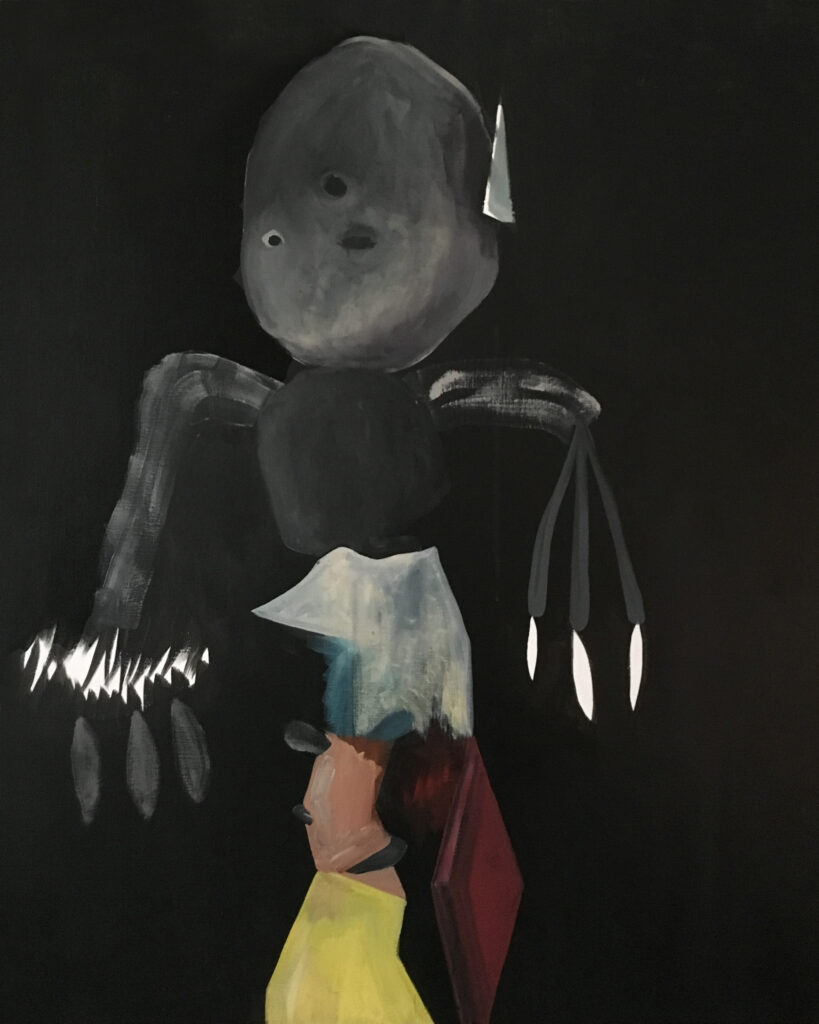
The world is ours, or Fritz Bornstück's praise of freedom
«Every lie creates a parallel world. A world in which it is true.»
Momus
In a short story entitled "The Door in the Wall", the British writer Herbert George Wells, famous author of tales of anticipation such as "The Invisible Man", "The War of the Worlds" and "The Time Machine “, tries to put in parallel two contiguous worlds inside the same reality. Except that, unlike Charles Lutwidge Dodgson/Lewis Carroll in "Alice's Adventures in Wonderland", one does not belong to dream, to imagination, storytelling or fiction while the other is rooted in the everyone’s reality. In "The Door in the Wall", the protagonist finds, in the heart of London, a green door in the hollow of a wall leading directly to an enchanting garden where everything is more intense and more alive than on the other side. Obviously, nobody believes him, not even his best friend who he tells of his dazzling discovery. And, returning to the place to prove it, the door is no longer there. But, on two occasions, while he is living crucial moments in his career, and goes back to the same place, he sees in the distance the presence of this green door in the hollow of the same wall. However, without stopping, he continues his path to fame and success with regret. Having grown old, he sees for the last time the long-awaited green door, stops and opens it feverishly. Alas, there is nothing left but a wasteland, as if the garden hadn’t been able – or didn’t know how – to wait for him.
With Wells, there are not two possible choices of life: the one you dream of or wish for and the one which plays out fatally and ultimately over the course of time. No, the two worlds lead their existence side by side, in parallel. They are born, grow and die the same way. We are not in the case that Oscar Wilde develops in the "Portrait of Dorian Gray": the other world as a hidden side, like a shadow of the first. Here, quite the opposite, this one opens ups, grows and develops in relation to the wants, desires, wishes, determinations, daring or courage that the other world engages; or dries up, languishes and withers away if the latter is overcome by routine, renunciation or discouragement. Similarly , we are very far from the declaration of the Blue Fairy in the equally famous "Pinocchio" by Carlo Lorenzini/Carlo Collodi: "If, in the future, you become reasonable, you will find happiness.” We are much closer to the famous injunctions of the surrealist poet René Char: "Impose your luck, embrace your happiness and go toward your risks" and "Hurry / Hurry to transmit / Your share of marvel / of rebellion / of beneficence.” So there are no longer any possible reminiscences, no remorse or regrets, no existential refuges in which to anchor one's melancholy, there is just life to live, intensely and passionately.
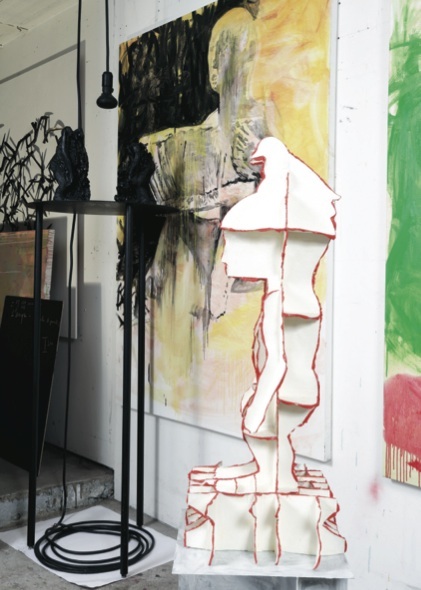
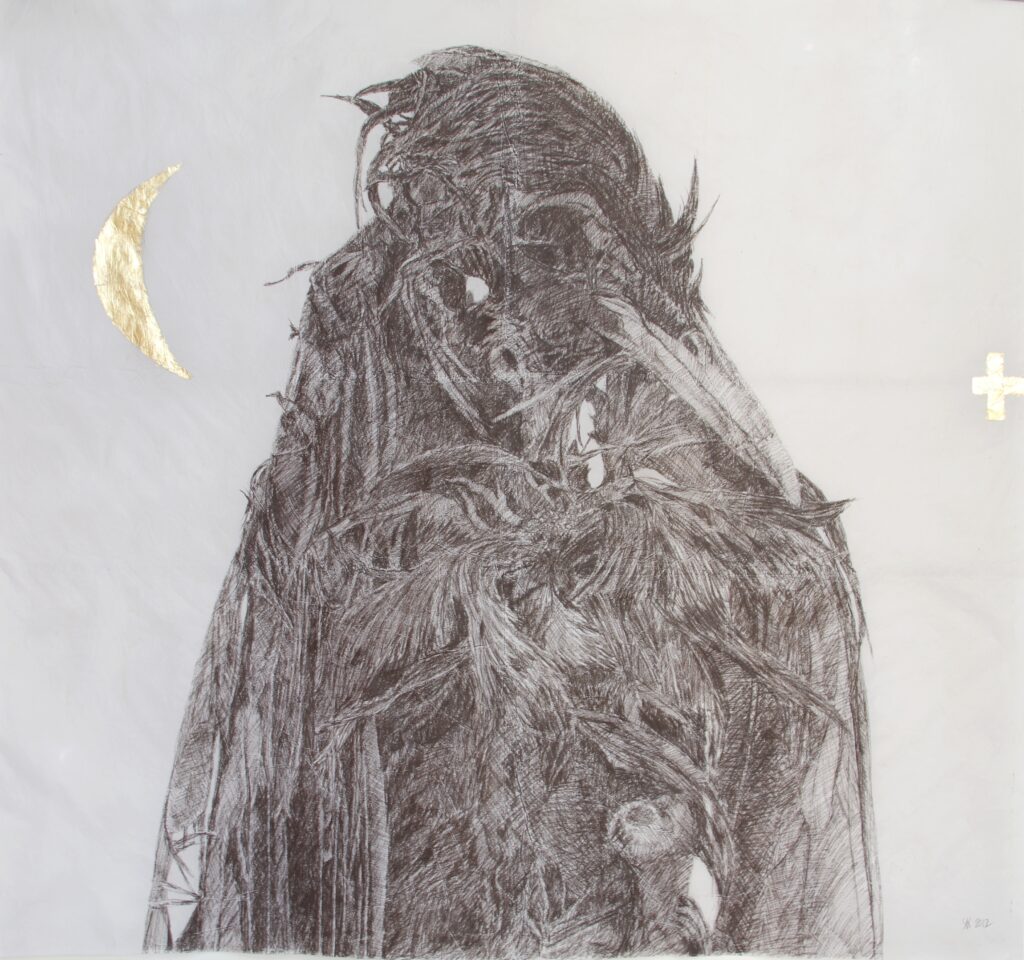
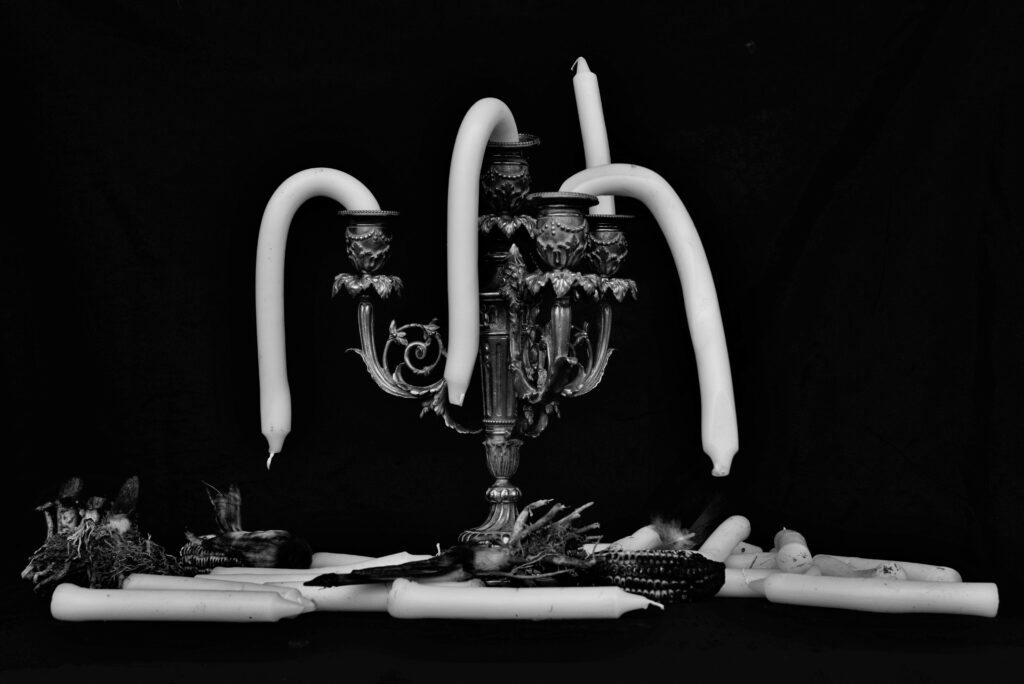
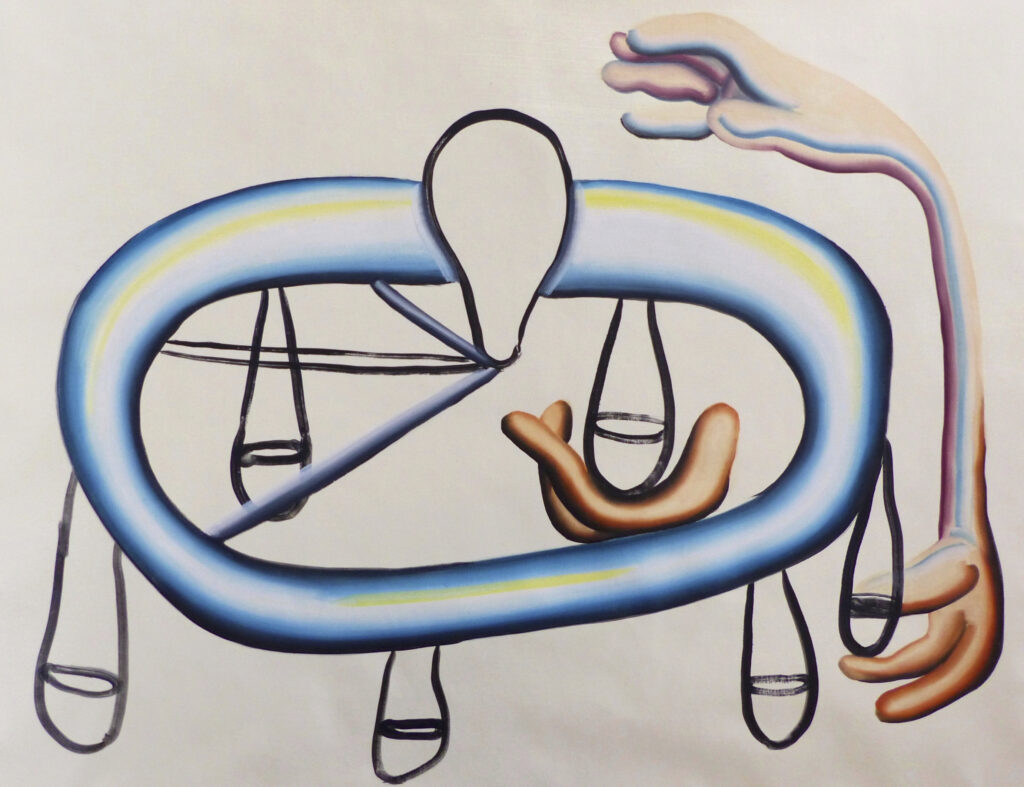
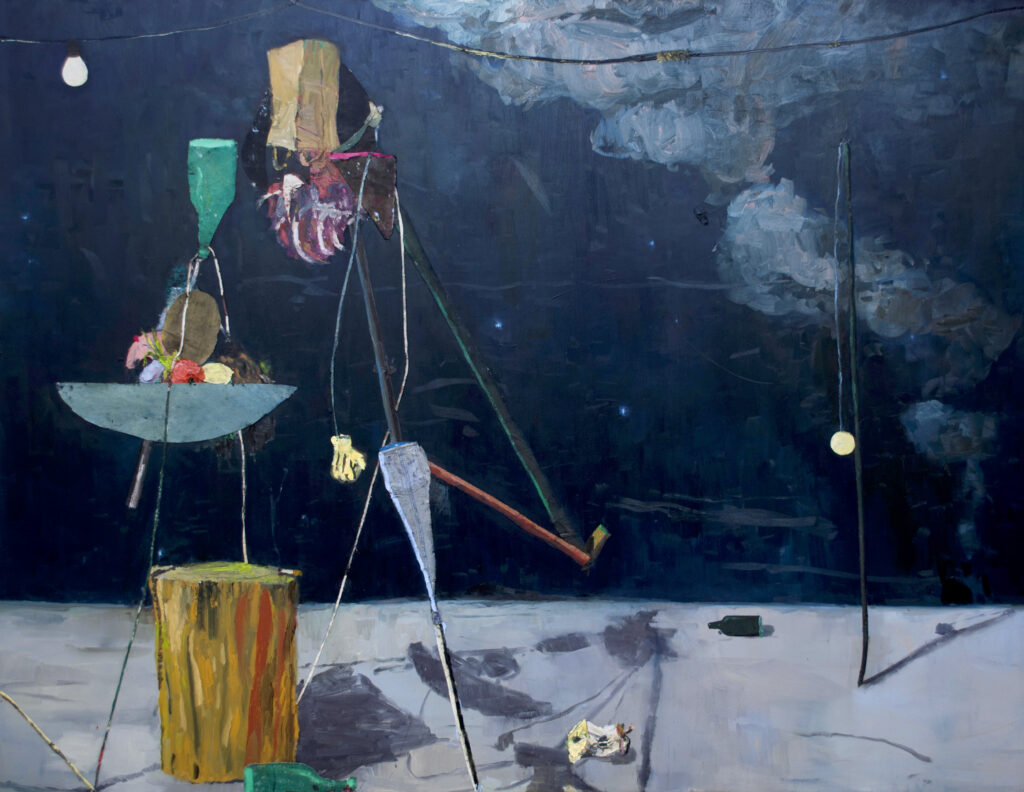
There is still one question to be resolved: in Wells' story, the garden behind the green door in the hollow of the wall seems to perceive – if not hear, see and live – what is happening on the other side, in particular the behaviour of the main protagonist, and changes accordingly. So now, can we ask ourselves if the character of a tale, a narrative, a fiction – even a representation, an image, a painting – can live, see, hear, and even respond to what is happening on the side of its reader, its spectator, or even on the side of the very spirit of its creator. "Ouch! You hurt me!" the piece of wood that gives birth to Pinocchio exclaims to the carpenter who first tries to cut him with a hatchet. The whole of Collodi's story is its own allegory, as the original puppet – the "burattino" – who behaves like a human only responds in the form of pranks, mischief and satire to any attempt at normalisation or formatting; he will thus crush with a mallet the sermonising and moralising cricket, and prefers to leave for the land of toys - the "Paese dei Balocchi" where all the people like him are – rather than listening to the Blue Fairy who can make him similar to humans. He doesn’t care, he who is more genuinely and deeply human than them. So, he brazenly replies to the Cricket: "Of all the trades in the world, only one would really suit me. [...] To eat, drink, sleep, and amuse myself, and to lead a vagabond life, from morning to night. Collodi will even call his story "bambinata", deliberately putting himself on the side of Pinocchio's word, rather than his own as an adult and an author. Pinocchio therefore embodies, beyond the "ragazzo di strada" that he is, the very figure of the magnificent vagabond that Charlie Chaplin will popularise, some time later, from "Tramp" to "The Kid". The latest series of paintings and sculptures by Fritz Bornstück is dedicated to this figure of Pinocchio. He thus wished to title their presentation at the Maïa Muller Gallery Speck und Schinken – "Schinken" [ham] is painter-slang for a classical, large format oil painting; "Speck " [bacon], on the other hand, is a synonym for decoy, as well for trouble. In the German version of the italian fairy tale, Pinocchio learns to walk by distinguishing his left leg from his right leg. He chants "Speck und Schinken" to keep his rhythm while putting one foot in front of another *... Unlike Wells' short story, the artist as Pinocchio once more opens the green door in the wall and delights in the discovery of the ruins of our world overgrown with wild grass and bouquets of flowers, cactuses drunk from the alcohol they produce, computer keyboards returned to a natural state, Dadaist scarecrows and lonely phonograms. A number of virtuoso vanities where reality is no more magical or enchanted than if it had suddenly been colourised like a Walt Disney film, but where its satirical and sardonic dimension only became more vivid, brilliant and delightful . And we, the spectator, with pleasure and enjoyment, finally find ourselves free and happy.
Marc Donnadieu
* About the artist
Born in 1982 in Germany. Lives and works in Berlin, Germany.
Born 1982 in Germany. Lives and works in Berlin, Germany. In the still lifes of Fritz Bornstück, found objects are given a new lease of life. By reusing and repurposing the waste (debris) of popular culture, the artist practices what he calls ‘cultural recycling’. Bornstück is an explorer. His materials draw on a wide range of sources: film noir, found footage, his own environment, his private waste. Bornstück’s works can be found in the collection of the Arken Museum in Copenhagen, the Hildebrand Collection in Leipzig, the Lützow Collection in Berlin, the Paschertz Collection (shown at Museum Heylshof in Worms, Germany) and the SØR Rusche Collection in Berlin and Cologne.
Fritz Bornstück will be exhibiting at Arte Noah, Kunsthalle Ferlbach, Austria in May 2020.