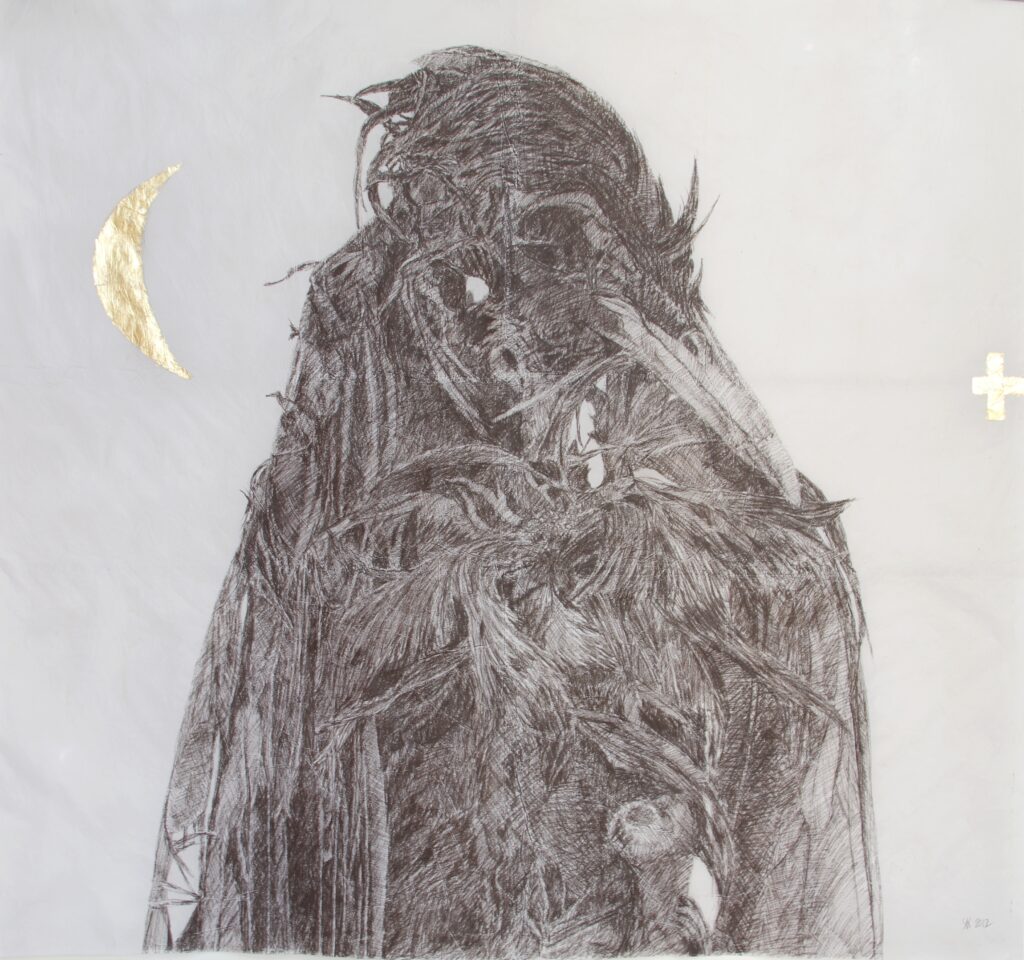
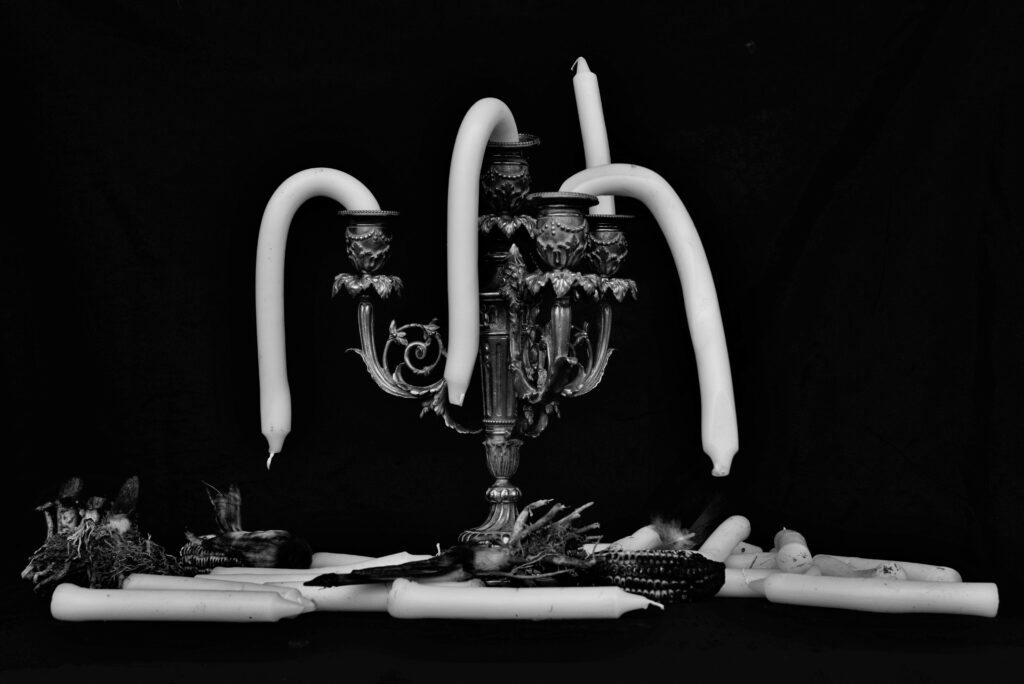
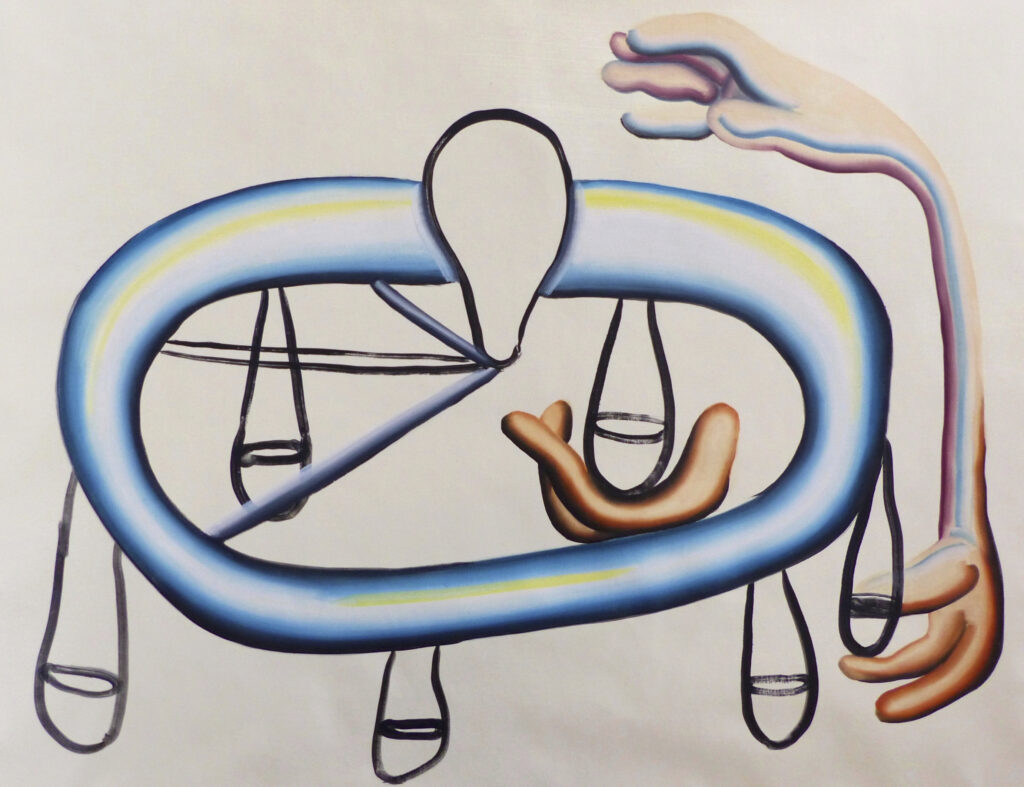
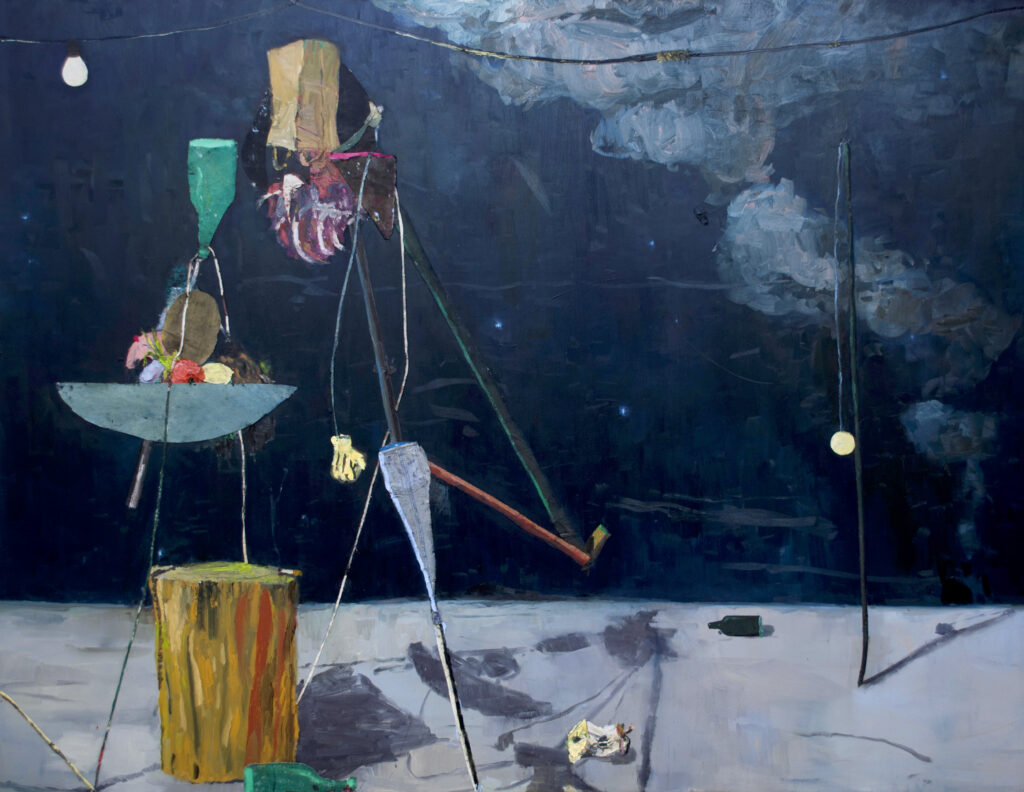
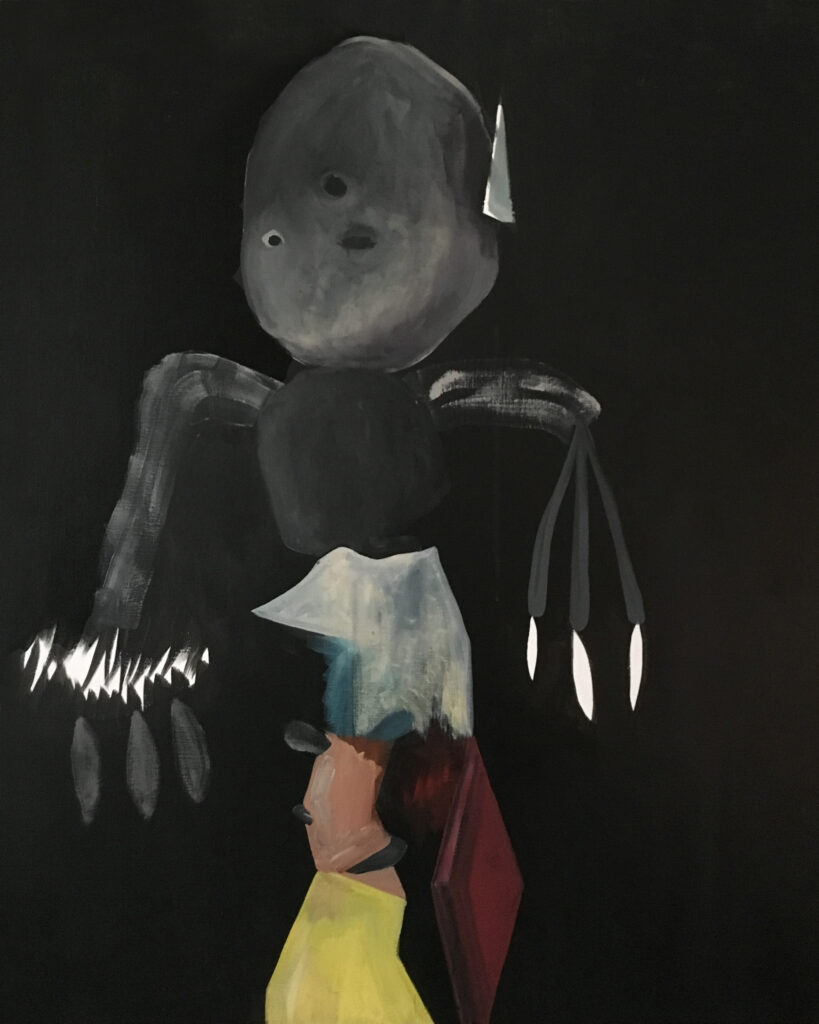
The Ifugao of the Philippine island of Luzon attach great importance to rice-growing. To enable the cultivation of rice, they literally shaped the natural terrain by carving rice terraces into the hills, all the while developing ritualised relations with rice deities, which are visualised by anthropomorphic representations – the so-called b ū luls, small figures carved in wood, then and now, by the mumbaki (‘shamans’). It is these b ū luls that Gaston Damag, who hails from Ifugao and lives in Paris, has been placing at the heart of his work for several years now. Because they symbolise Ifugao culture as a whole, with its rites, beliefs and artistic achievements, the b ū luls are a kind of synecdoche in the artist’s work. His lasting preoccupation with these small divine representations – which for the past century have been shaped more or less to match western tastes (see Philippines, archipel des échanges, p. 226) – bears witness to his interest in the gap between endogenous and exogenous perceptions of Philippine culture.
Somewhat obscured by the famous treatises on economic anthropology, which have looked at mercantile or free exchanges of objects, ergonomic anthropology is aiming to reconsider the question of the use of so-called ‘ethnographic’ objects. This kind of research has highlighted the fact that objects are ‘entangled’ in the culture that generates them (as are the entangled objects studied by Nicholas Thomas, from whom the term is borrowed) and that their transfer into another culture entails a new entanglement – the flipside, if you will, of the emergence of new uses. When transferring an object from one society or era to another, new uses replace the previous ones and the object becomes entangled again. Damag’s work, in which cultures collide, is a poetic highlighting of this process of entanglement. Far from the accusations traditionally brought against museums, whose display cases are deemed to devalue the disused tools they contain, Damag’s work is more than just a contribution to the century-old museographic debate on the presentation of ethnographic objects or works of ethnic art. Without any hint of orientalism or occidentalism, it reveals to us the ways in which non-western objects are entangled in western culture.
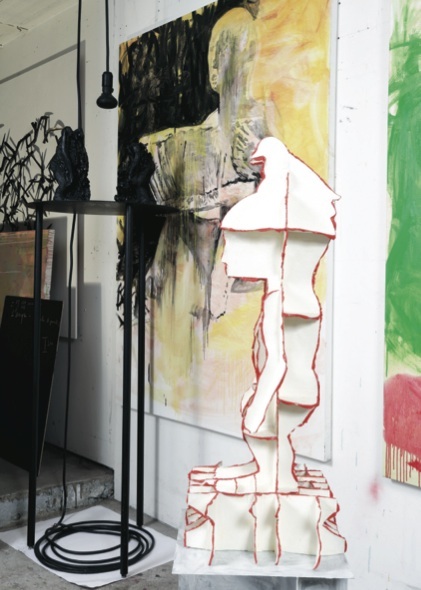
We should also note that Damag’s work is based on principles of superposition and accumulation. Firstly, because his painting is the result of a succession of different stages and reworkings enabled by the slow drying process of the oil paint. Since every brushstroke changes the result obtained at an earlier stage, each provisional version is given up for the next – an approach other painters have also explored (one example among many being James Lord’s Portrait by Giacometti ) – but the various strata of Damag’s palimpsestic painting can be inferred from the relief or transparency of the various layers. Moreover, from his training as a minimalist artist Damag has retained a taste for self-reflexivity. His work on representation is therefore also a reflection on art itself, as he expands the b ū lul , which symbolises Ifugao culture in particular, into an allegory of sculpture in general. Damag’s work is cumulative with respect to the repetition of the b ū lul motif, which it confronts with the artistic forms of modernity. The artist never strays from the path he has laid out, whose point of departure and horizon is the dialogue of cultures.
Pierre Vialle
Pierre Vialle is Deputy Director of the centre for art and research Bétonsalon and of Villa Vassilieff in Paris. He is also a professor at the Department of Fine Arts and Art Sciences at Université Paris 1 Panthéon-Sorbonne. Recent publications include ‘L’effacement des lynchages californiens. La mémoire et l’instrumentalisation des images’, Les Cahiers de Framespa [online],no.25, 2018: Mémoire et oubli. L’histoire et l’art à l’épreuve du souvenir