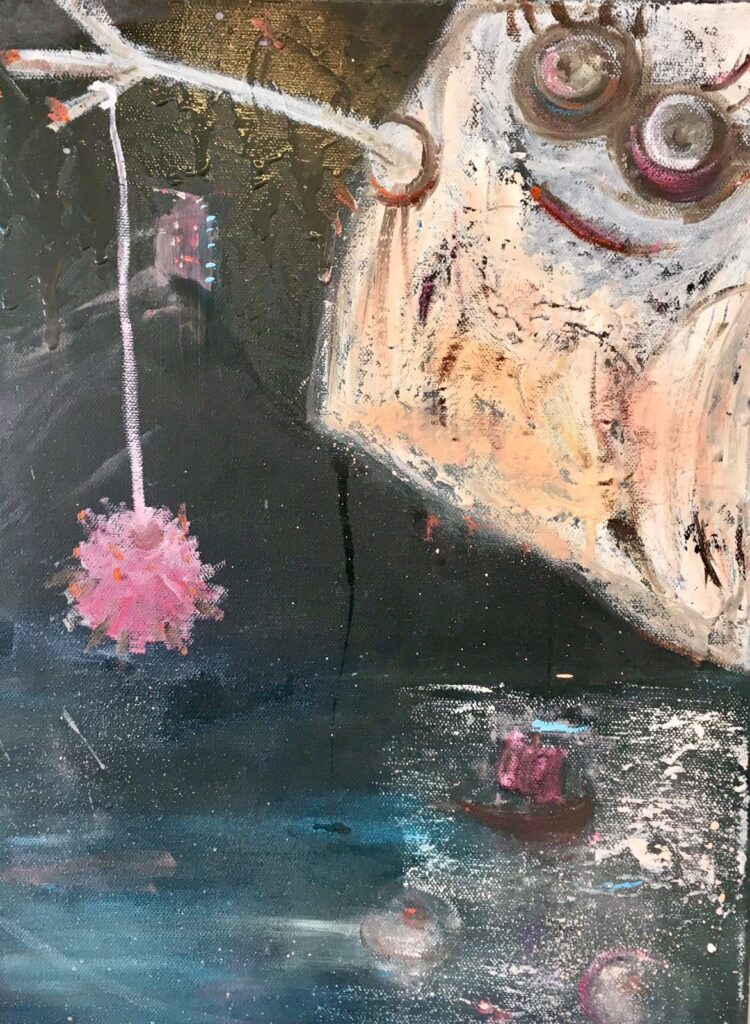
In front of Simon, hanging from his stick, sa-majesté-des-mouches sneered. Simon finally gave in and returned her gaze. He saw the white teeth, the dull eyes, the blood... from the depths of the ages, an inexorable certainty of déjà-vu chained Simon's gaze.
William Golding - His Majesty the Fly (1954)
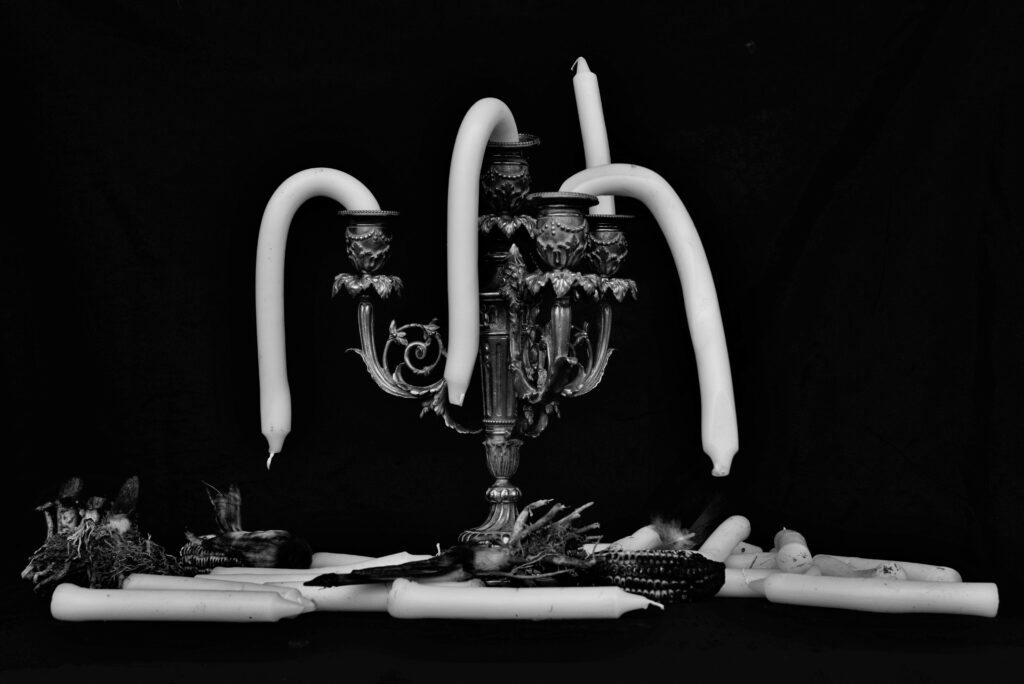
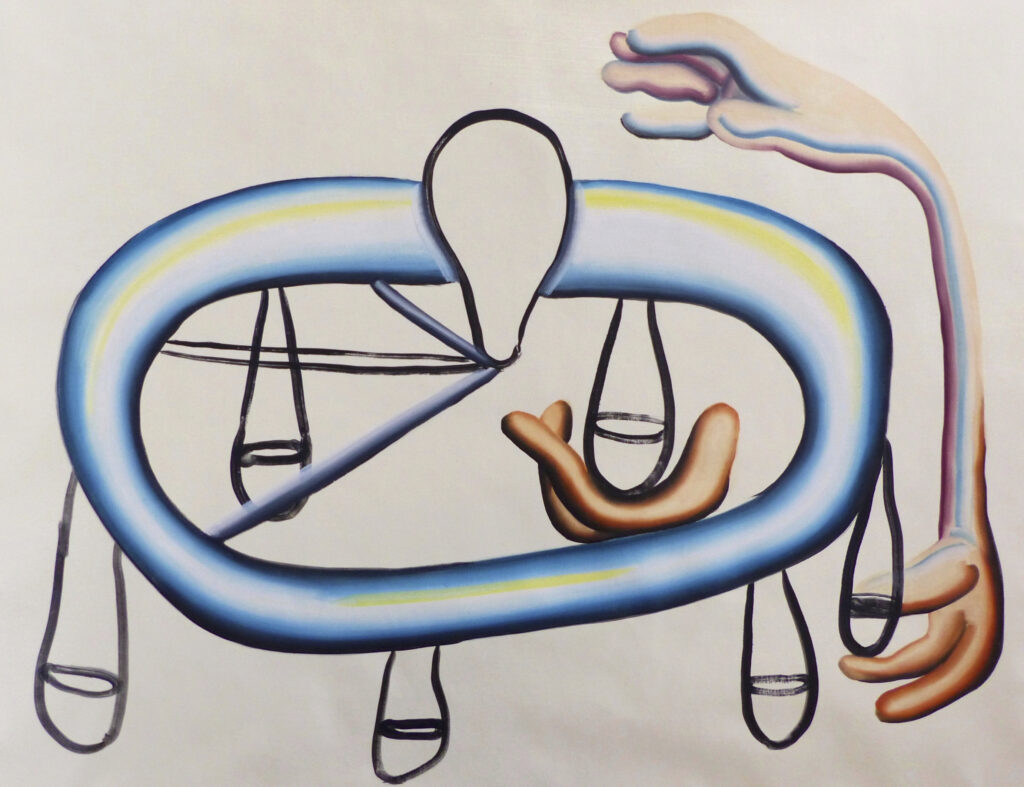
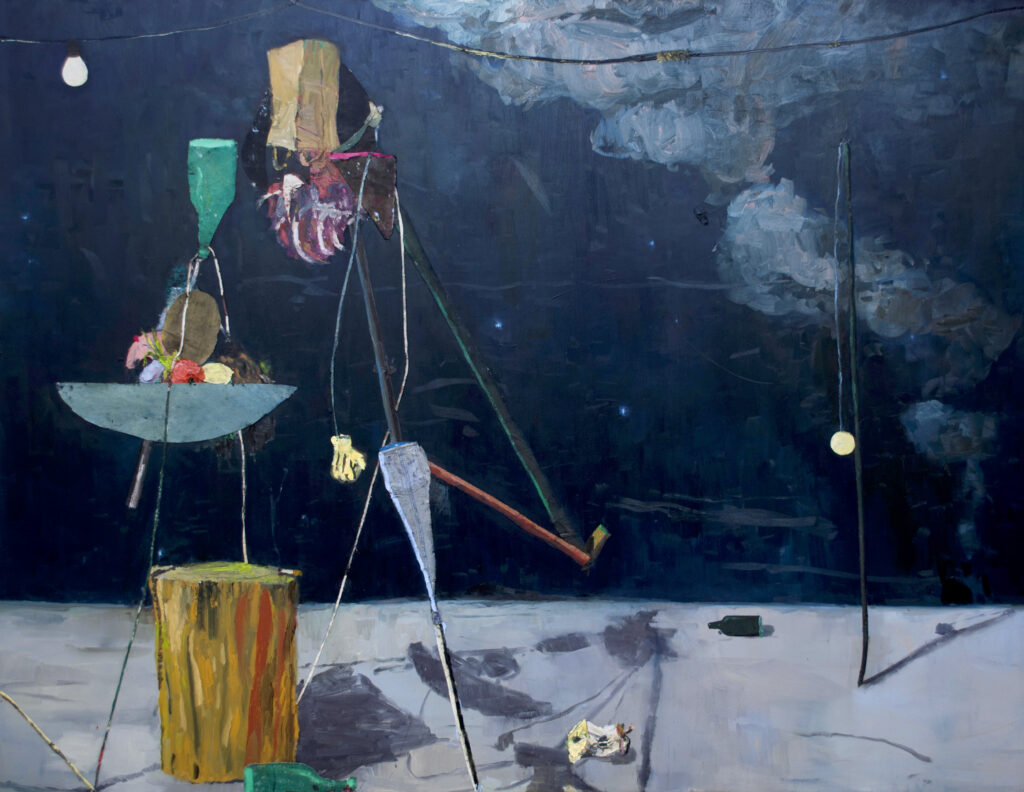
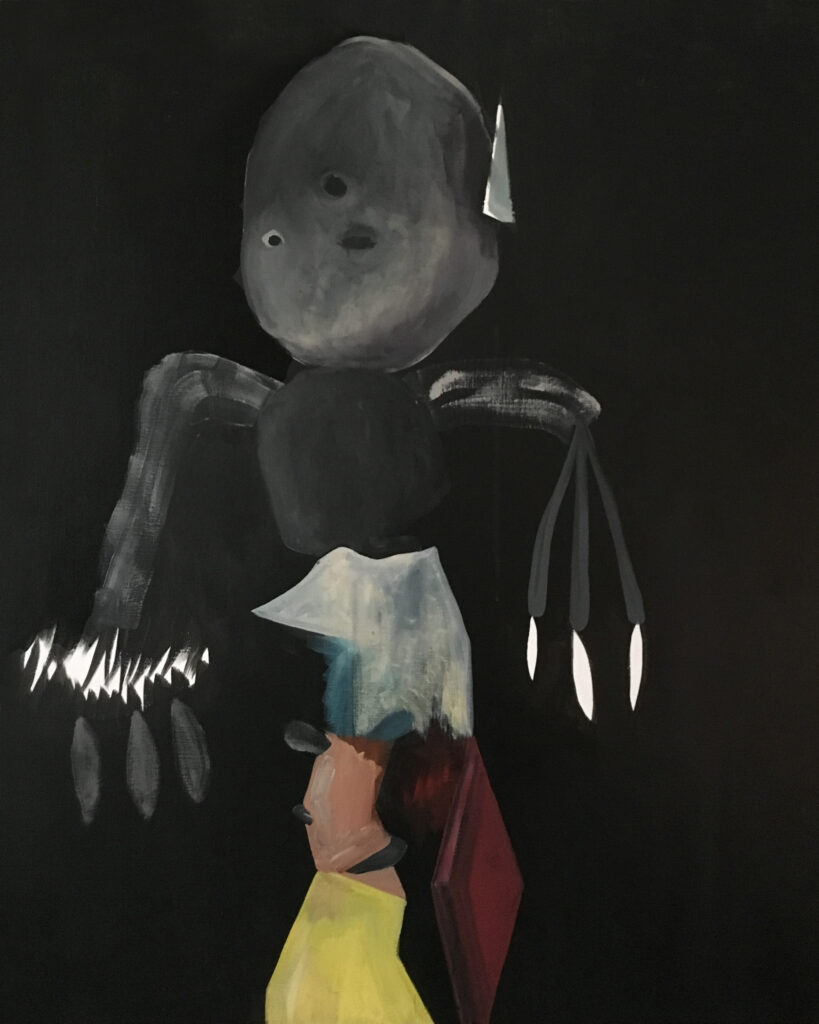
A glass of red wine in hand, seated on a draped armchair, a faceless little girl toasts in a ghostly manner. The living room walls are lined with flowers. Another little girl stands, her hand resting on a table covered with a long tablecloth, under which a leopard-child is hiding. An electric garland lies on the floor. This drama is a little sad. The children seem to be celebrating the end of a reign, the end of a cycle, the end of innocence. Gretel Weyer's new works (ceramics, watercolors, embroidery, engravings, drawings) are agitated by turmoil and tension. They reflect decadence, anxiety and the imminence of a reversal. Far from comfort, the uprising is palpable. At first glance, the animals, whose bodies are fragmented, mutilated and impeded, seem to have lost their lives. They are slumped, limp and distended. But this is not the case. On the surface of their coats, a multitude of butterflies are patiently working on their rebirth, their metamorphosis. The insects symbolize transition, the promise of a passage between past and future. Now it's my turn.
The artist explores a porous, nebulous territory, where reality and fiction, life and death, are inseparable. The tenderness and innocence inherent in childhood evaporate. In the course of the works, a muted violence emerges from the hieratic, frank presences of children, the bodies of dead game, drapery and masks. Gretel Weyer draws, shapes and stages her new creatures, which in the collective imagination come from mythology, fairy tales, cinema and literature. From Peter P an to orange mécanique, from sa-majesté-des-mouches to Visconti's damnés, the artist juggles different imaginary worlds to express vital refusal and resistance. Animated children are about to reclaim a power they have been deprived of for too long. The works attest to a mutation, with embodiment replacing disguise. Empathy, tenderness and melancholy give way to violence and vengeance. They're ready. Heads adorned with goat's horns, faces erased, masked, eyes green, they advance armed with scythes, sticks and bats. A supernatural army is on the march. As the culmination of her current project, Gretel Weyer is currently working on a veritable monument: a manifesto that gives substance to the spirit of revolution that inhabits the new works.* A child, naked and masked, climbs a heap of emptied human bodies and clumped animal skins. He sets himself up as a hero, personifying not only the seizure of power, but also the birth of a new civilization, the beginnings of which we can see.
*The work will be presented at Le Creux de l'Enfer in Thiers, from October 12, 2016 to January 31, 2017, as part of the Damien Deroubaix - Post-Mortem exhibition.
(Curator: Frédéric Bouglé).
Julie Crenn