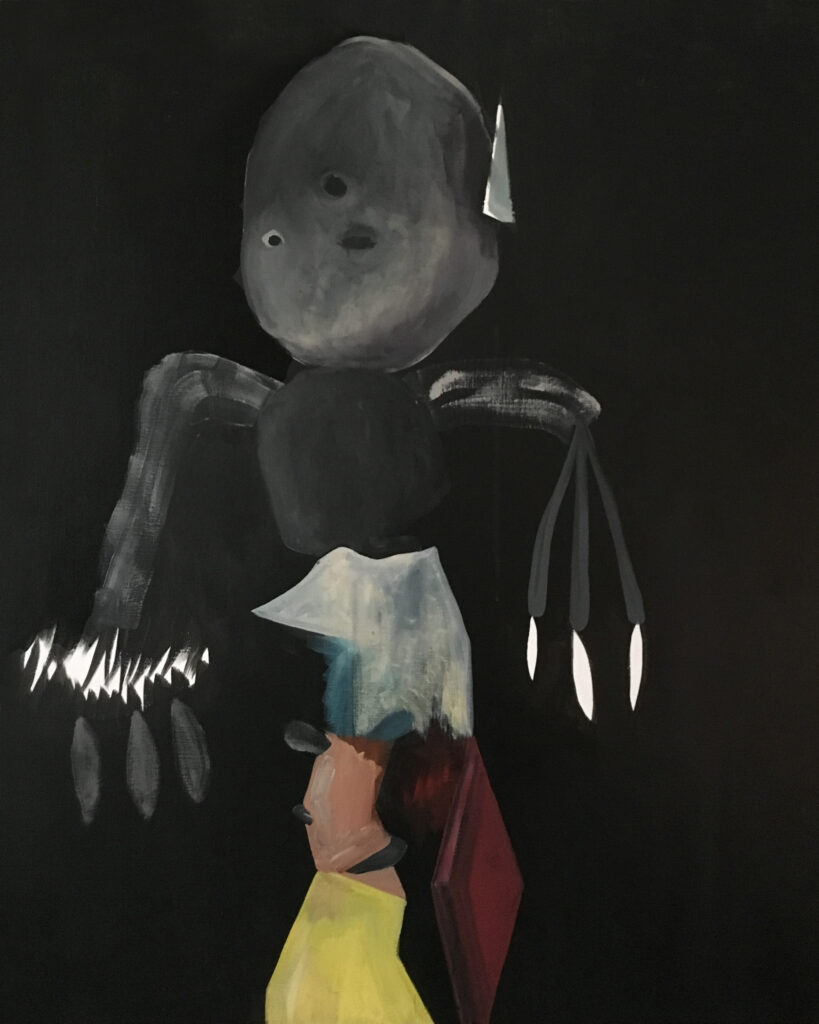
We know how much memory is not just made of layers built one on top of the other but also includes gaps, chasms and caves, sometimes decorated with paintings, figures and shapes that never fail to surprise us and of whose origin which we know little, or pretend to know little.
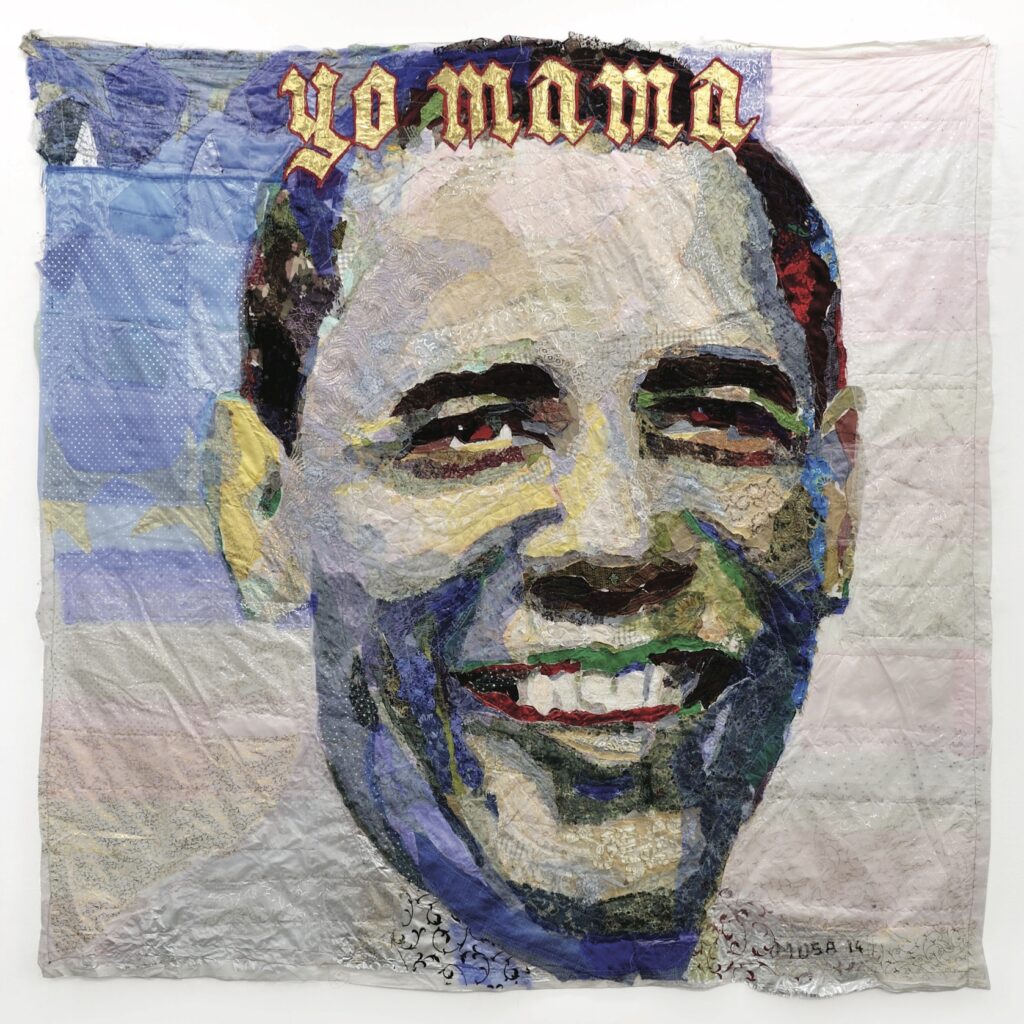
In these faults are buried indiscreet dreams, hidden secrets that are very present, however, and very disturbing, certainly. Their sudden encounter in the works of Hassan Musa, on canvas and in the caverns of memories, give rise to disturbing reminiscences, obscure concretions that revive thoughts buried in the twists and turns of the history of art.
Hassan Musa does not play with history; It is a dangerous, murky game, full of things unsaid, misunderstandings, perhaps resentments, misinterpretations and truncated visions on both sides. On the same stage, he brings together and arranges precisely side by side elements of distant histories whose participants are known: Gauguin Paul, painter, (1848 - 1903) produced more than five hundred works admired, collected and exhibited around the world; Kalashnikov Mikhail, engineer, (1919 - 2013) designed around one hundred and fifty weapons appreciated, produced and used around the world.
These are stories that we have heard a thousand times; those where we don’t remember precisely the way they happened, where we only remember the end, which is terrible, and which intertwine characters who are both good and wicked, like in the tales children like to tell themselves; scary! One could not describe it better: imaginary. So it is, with the mysterious and disturbing little Tahitian girl lying on her front, depicted in the painting by Gauguin at the Albright-Knox Art Gallery in Buffalo, whose title here is particularly eloquent: "Manao tupapau": Spirit of the Dead Watching.
Hassan Musa takes over from the Spirit of the Dead and, as watchman, pays everyone the tribute they deserve because everything is superimposed and jostling: the printed fabric on which he paints, which says something about the work – industrial undoubtedly – of the one who carried it out; the ornamental motifs of flowers, birds, and branches, which adorn the scenes and recall so-called paradises; the titles, obviously – words which, as we know, we must be wary of, that announce a particle of truth when the painter weaves into the canvases, in colours and in figures another story, a story that would seem at first sight to be a very simple story to put children of the past to sleep, including those who have suffered from the violence of man.
Laurent Busine
Curator and art historian. Director of MAC'S, Hainaut, Belgium from 2002 to 2016. Director of exhibibitions at Palais des Beaux-Arts, Charleroi, from 1983 to 2002.