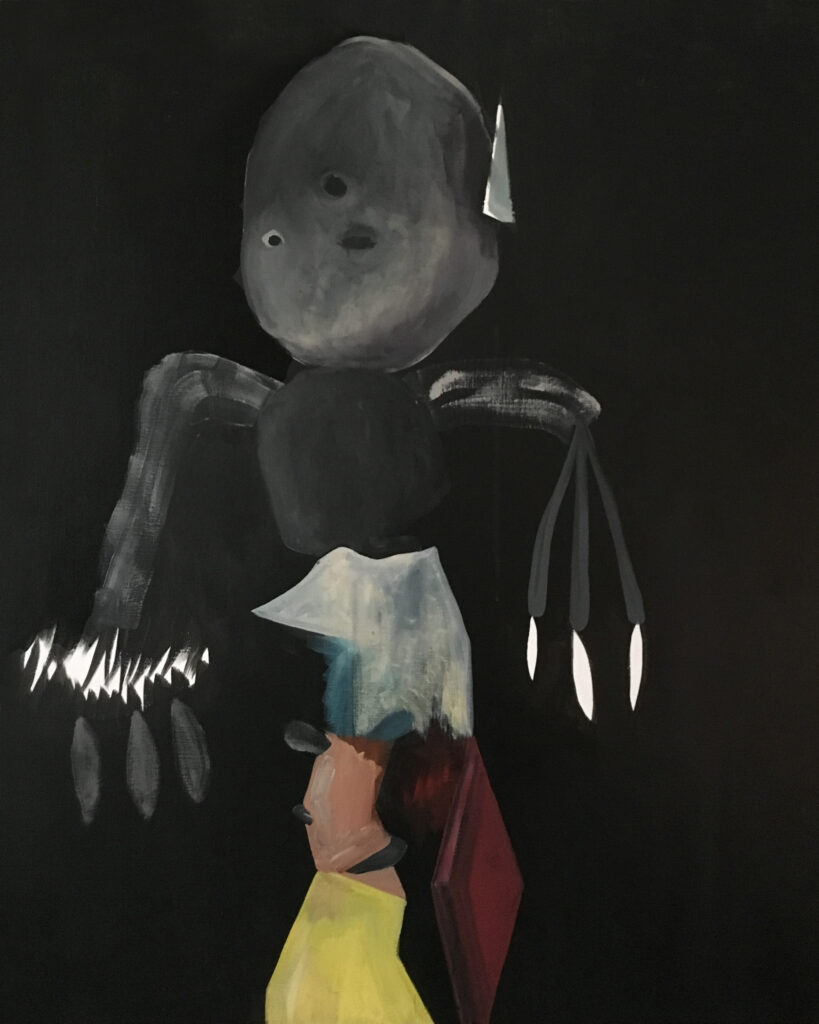
Steal Lifes
By Sarah Ligner
"Thus irony always beats despair to it: it does a pirouette and – in less time than it takes to utter – it has already evaded the cause of our torment; right under the nose of fate, we have become a gardener, a surveyor or a violinist, and our person is smuggled away under the greatest variety of masks "(Vladimir Jankélévitch, Irony).
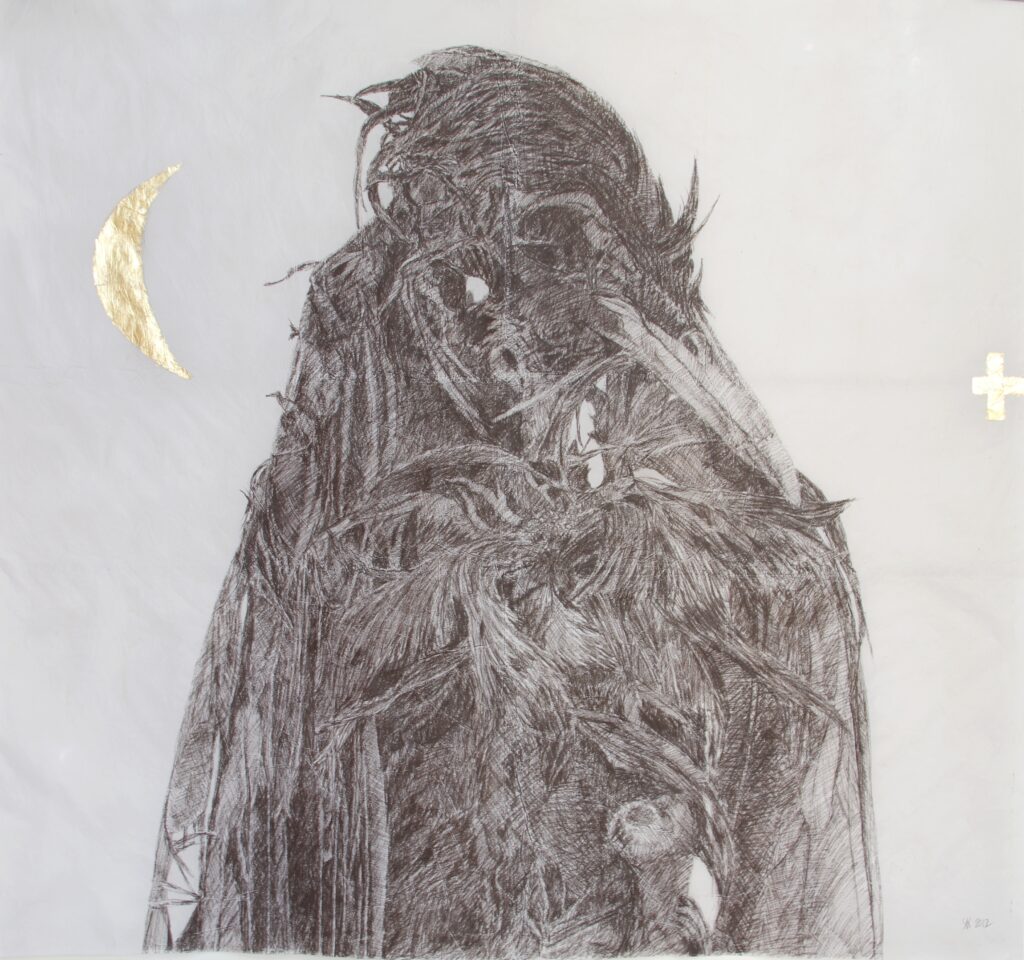
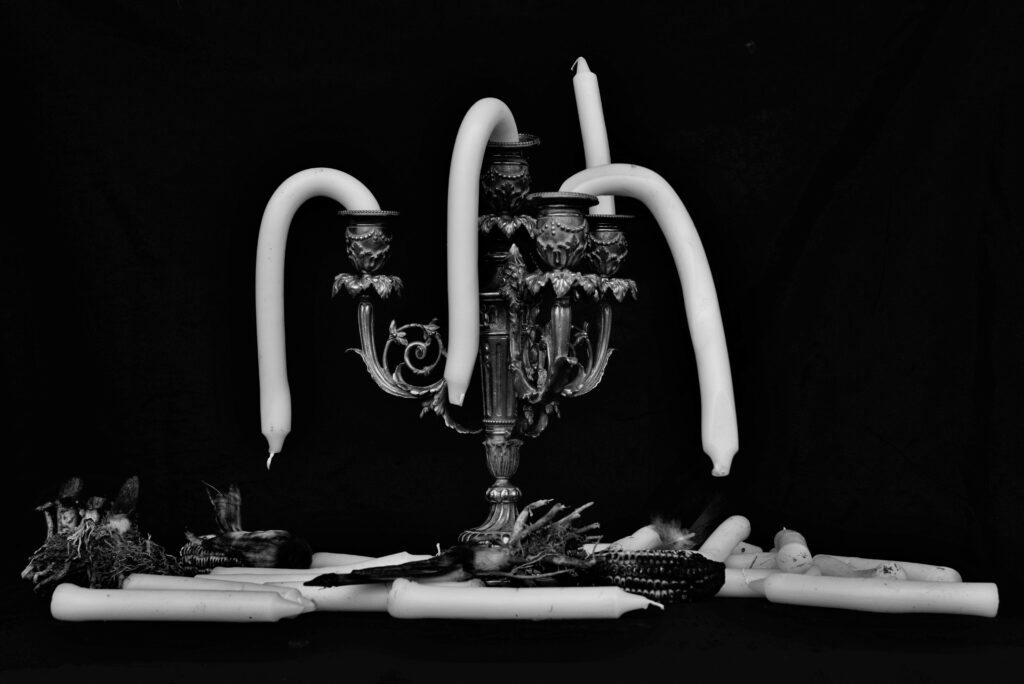
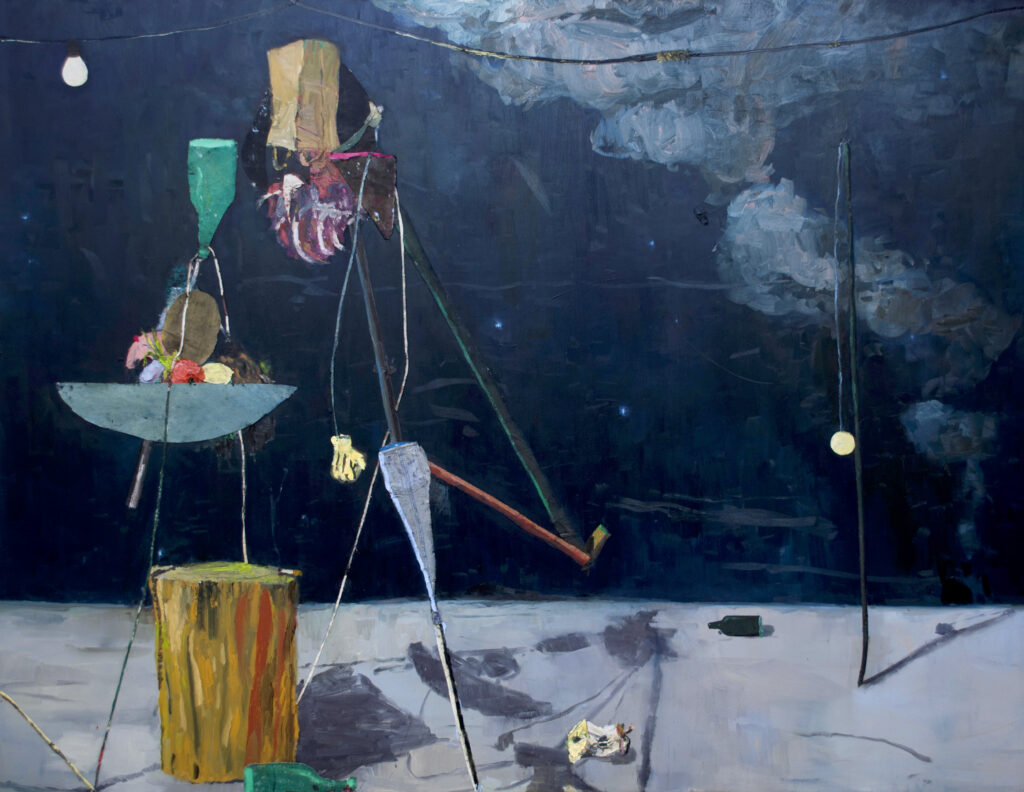
The still life, a Western pictorial genre, probes the hieratic character of elements of nature and of man-made objects. The linguistic variations - still life, nature morte, Stillleben - insist sometimes on the inanimate nature of objects and sometimes on their immobile and silent dimension. This pictorial genre, however, can be extremely expressive when it expounds on the fleetingness of existence. At the School of Fine Arts in Khartoum where Hassan Musa studied in the early 1970s, categories of Western painting such as still life, portraiture or landscape were presented as models. They continue to haunt his iconographic repertoire. But these are just a few images among others that the artist has summoned at will for several decades to create a chronicle of our contemporary societies.
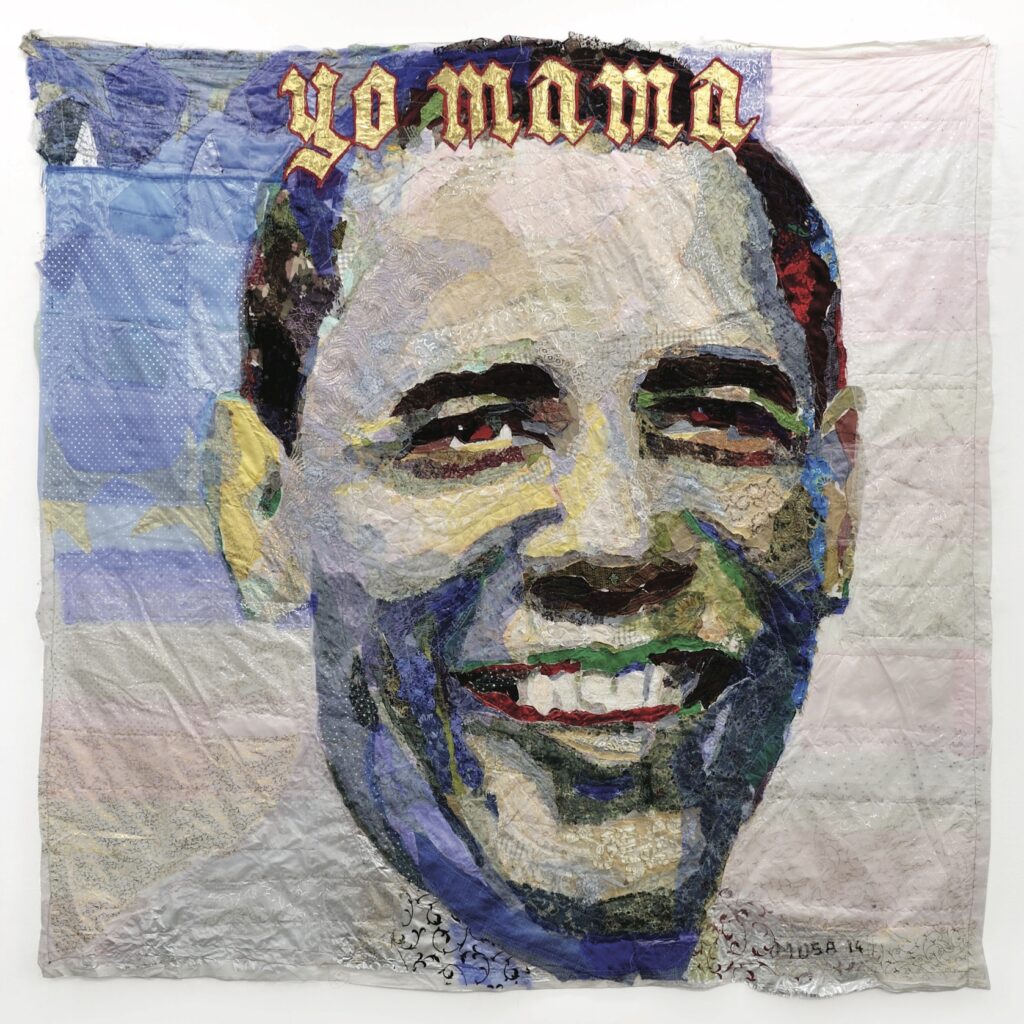
Hassan Musa brings together still life and assassination: the frugality of the last meal of Christ is eclipsed by the globalisation of fast food under the banner "Eating kills", while the immaculate flesh of the odalisque in her harem is surrounded by burgers and fries. Hassan Musa dishes out the emblems of consumerist and capitalist societies. An expert in the field of diverting images, he also likes to make some shifts in the art of language. From still life to steal lifes, he refuses the immobility of the world to tackle instead its endless upheavals, giving rise to bitterness in the face of the lives that are revealed.
Interrogating the construction of characters of history and of imagination leads us to the artist himself. During his career in Sudan and then in France, Hassan Musa has time and again come up against questions relating to identity. In the artistic field, he has denounced the confinement of creativity to geographical norms. Rather than letting himself be confined in his self- portraits, he prefers instead to deconstruct his face, the features of which are cut in pieces and added to those of other images. Wary of any taxonomy, Hassan Musa weaves eras and genres and rejects the hierarchy of images, all in joyful freedom, where the irony works to indicate what, in humanity, withers.
Interrogating the construction of characters of history and of imagination leads us to the artist himself. During his career in Sudan and then in France, Hassan Musa has time and again come up against questions relating to identity. In the artistic field, he has denounced the confinement of creativity to geographical norms. Rather than letting himself be confined in his self- portraits, he prefers instead to deconstruct his face, the features of which are cut in pieces and added to those of other images. Wary of any taxonomy, Hassan Musa weaves eras and genres and rejects the hierarchy of images, all in joyful freedom, where the irony works to indicate what, in humanity, withers.
Interrogating the construction of characters of history and of imagination leads us to the artist himself. During his career in Sudan and then in France, Hassan Musa has time and again come up against questions relating to identity. In the artistic field, he has denounced the confinement of creativity to geographical norms. Rather than letting himself be confined in his self- portraits, he prefers instead to deconstruct his face, the features of which are cut in pieces and added to those of other images. Wary of any taxonomy, Hassan Musa weaves eras and genres and rejects the hierarchy of images, all in joyful freedom, where the irony works to indicate what, in humanity, withers.
Sarah Ligner is Head of the Historic and Contemporary Globalisation Heritage Unit ; Department of Heritage and Collections, Musée du Quai Branly, Paris