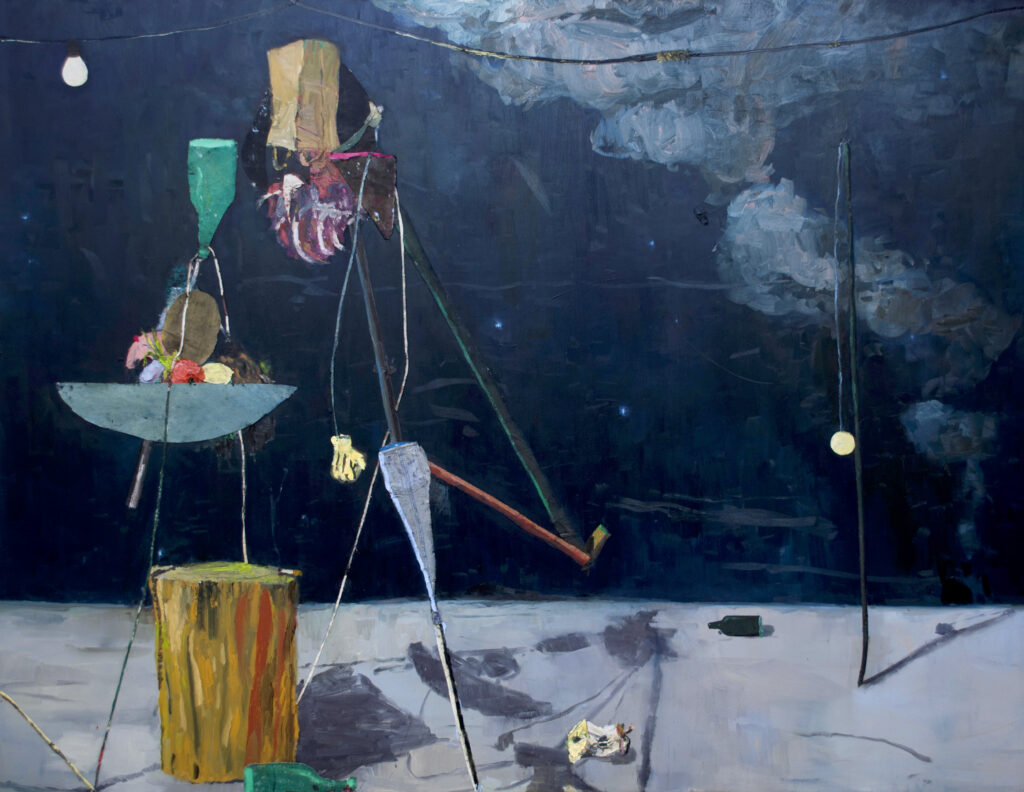
IO BURGARD, «Desiring objects».»
It happens many times that a flash of animism comes over us for a moment, and that in settling its eyes on an object, the thought comes to mind that its presence is pleasant. We say something is transitive when it carries a directed action from a subject to an object. We experience precisely the inverse relation when we are in the presence of work by Io Burgard: suddenly the thing touches you, moves you, and you love it. How does it do that?
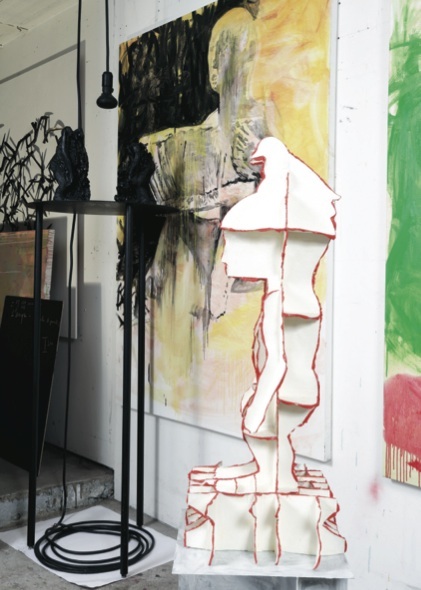
Whether embodied by drawing, sculpture or bas-relief, the works of Io Burgard seem endowed with some principle of inner life that presides over their form. Their hollows, their rounded edges and their polished surfaces prepare things for an upcoming encounter. The Window of a Train is embellished with an indentation where an arm would rest, while a little ledge invites you to rest your chin. A welcome object, as the artist likes to call it, this sculpted window is shaped to the need for comfort often unmet in wandering contemplation. We are consoled by the objects: here they are, soothing and comforting us.
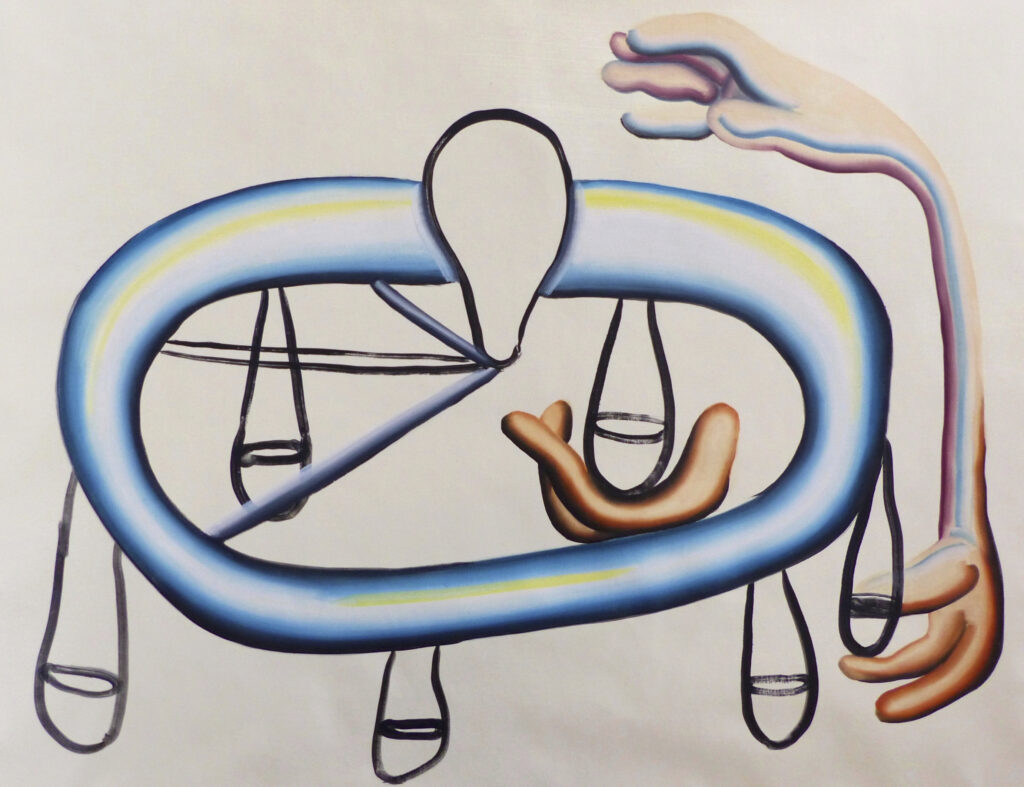
Everywhere, it is form that bonds with you. The Musical Chair urges the body to be an interpreter. The mouthpiece and mouth are there, making this furniture the instrument of a junction between animate and inanimate beings. Its curve towards the directed face organises the temptation of a breathless embrace. As an observer of their wild state, Io Burgard has chosen to show the desiring, not just desirable, side of objects. Basin, window and fountain draw to them tongues and small hands. We believe we handle these things of little or nothing that populate ordinary and everyday life: here they are, captivating and revealing their acting functions to everyone.
The principle in physics of wave-particle duality offers by analogy a common denominator to these works. Unlike the concepts of classical physics, this testifies to quantum objects sharing the properties of both particles and waves. Whether flat or with volume, Io Burgard's works all experience surges within their boundaries, in their silhouette, thus exceeding their formal expectations. The Little Canine Companion is their discrete insignia. This plaster emblem is as domestic as it is symbolic: an intermediary – it’s the one that makes possible the coexistence of autonomy in animals and in objects and sublimates their capacity to be loved.
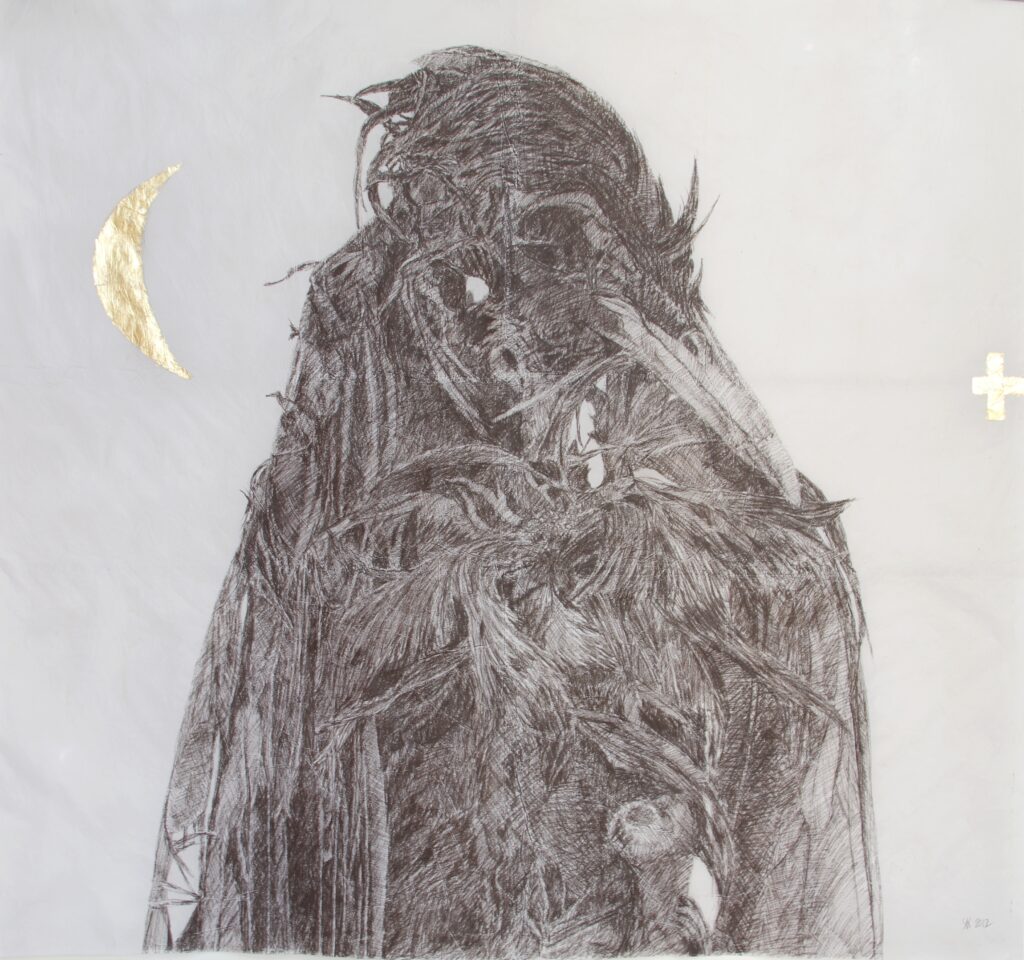
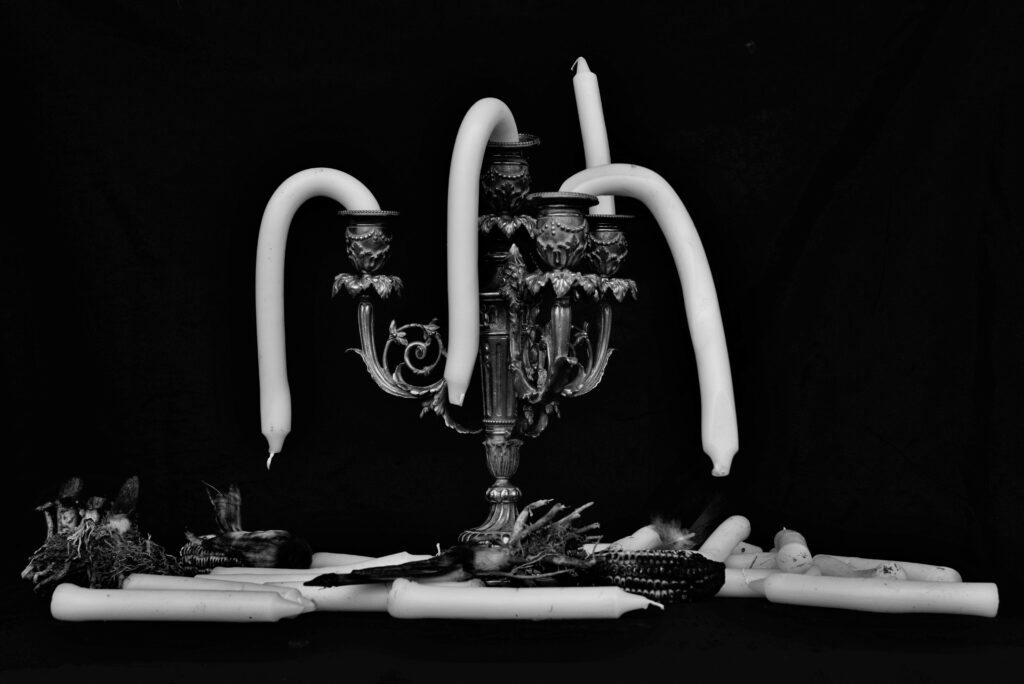
The things of Io Burgard contain an ambiguity, which is to bring fantasy (drawing) into three-dimensionality (sculpture). The artist compiles the movements that inhabit the world and its animate and inanimate beings. She pursues the decentring of the gaze that was initiated by Jean Arp’s Man Seen by a Flower: in every transgression of their medium, the works of Io Burgard document the bursts of desire that join the world and its objects, and that cross the boundaries between the sensible and the invisible, the tangible and the palpable.
Camille Richert
PhD student under Laurence Bertrand Dorléac
Teaching Assistant at Sciences Po.
Manager/Tutor of the 9th edition of the Sciences Po Prize for Contemporary Art.