«How can we attribute to reality what belongs to reality, and to art what belongs to art?»
«I'm a sculptor at heart», admits Myriam Mihindou. This new exhibition follows the meandering path of a sculptural practice that has inhabited the artist for over thirty years. Her work has certainly taken other paths - photography, drawing, performance, video, installation - but sculpture has never managed to conceal its hold. Defying definition, it is part of a polymorphous creative process in which the body plays a central role. In 2001, Myriam Mihindou used photography to capture sculpted moments, fragile compositions of flesh and nature created on the volcanic island of Réunion (No Angel series).
1. All quotes are by the artist.
Caption: Vivace - From the series Fleurs de Peau, 2019 - Skin flowers, wax, hemp, Marseille soaps (left) Broken Nose and Lips - Sculptures in soap, titanium white, hemp - (right) - Variable dimensions
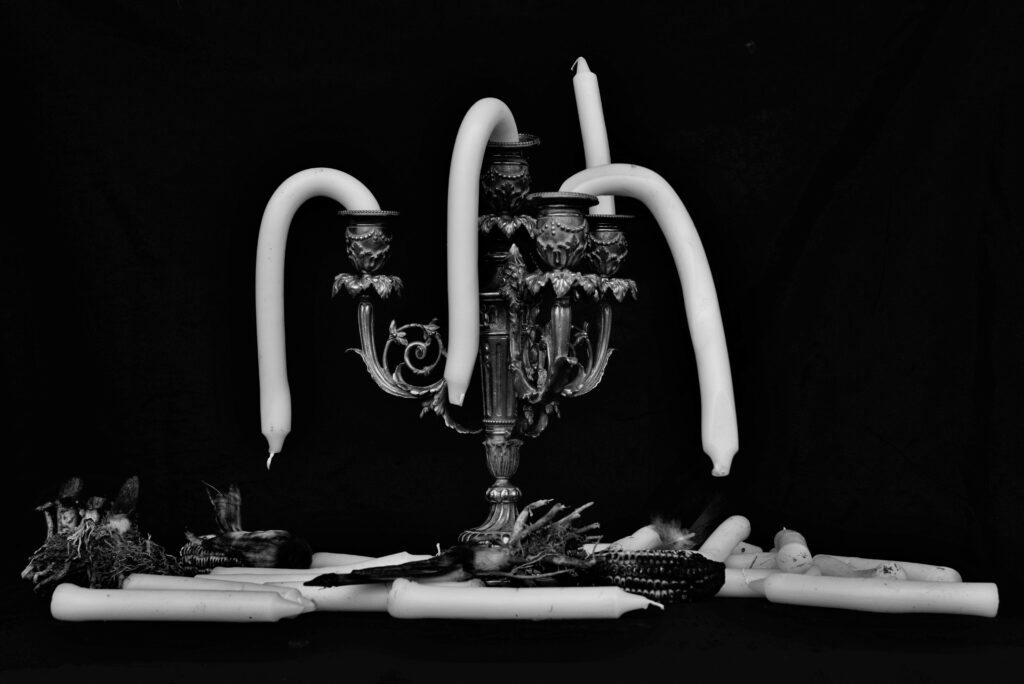
Sculpture initially entered her work in a more classical guise. It was as a blacksmith that Myriam Mihindou defined herself at the École des Beaux-arts in Bordeaux. Metal has continued to feature in her work, particularly copper. It has given way to more unusual materials in the field of sculpture: wax, cotton, soap. They join a range of materials inhabited by memory, which Joseph Beuys had also made his repertoire. Oscillating between the organic, mineral and metallic worlds, the substances chosen are in no way inert; on the contrary, they are inexhaustible and fertile. Myriam Mihindou becomes one with them, inscribing herself in an elementary relationship with matter. Shaping, polishing, bending, extracting, stretching, tapering: these are the essential gestures. Lightness, attraction, gravitation, suppleness, delicacy, solidity and fragility form the glossary of the artist's elective affinities.
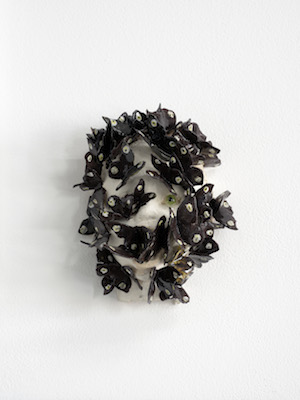
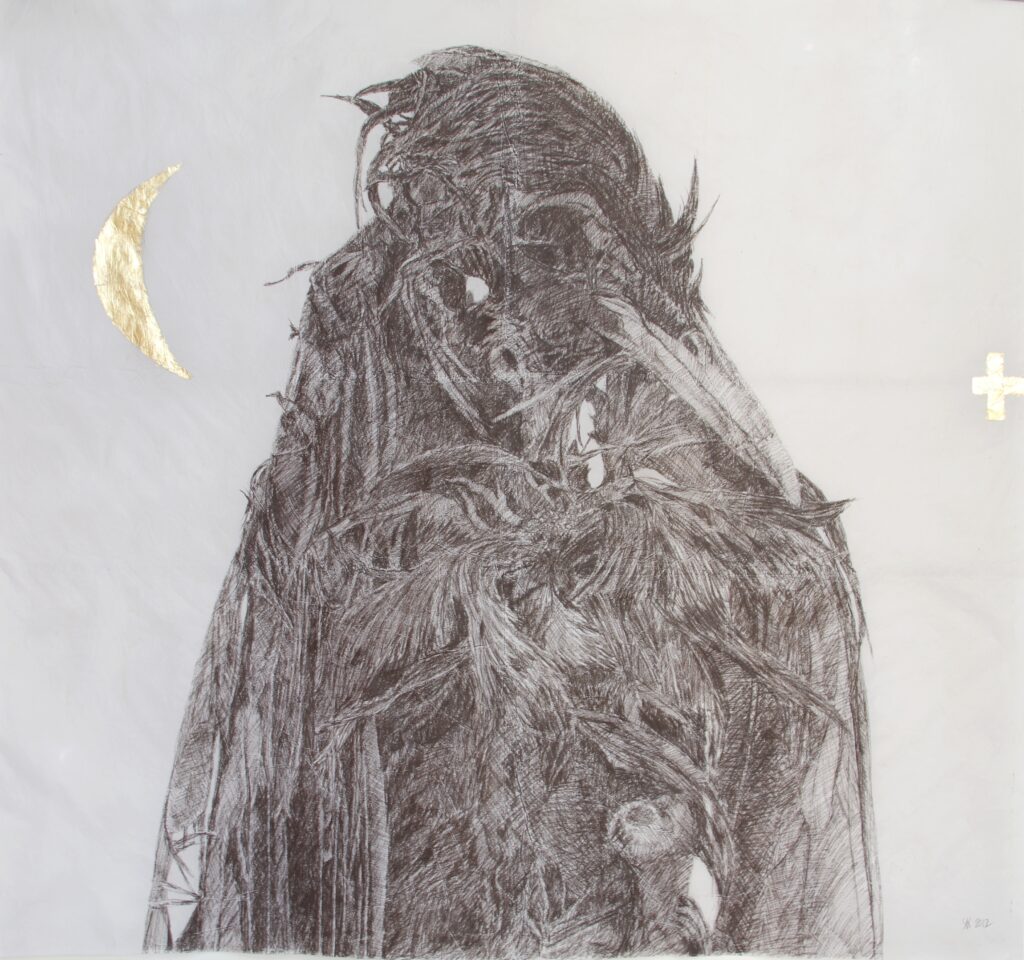
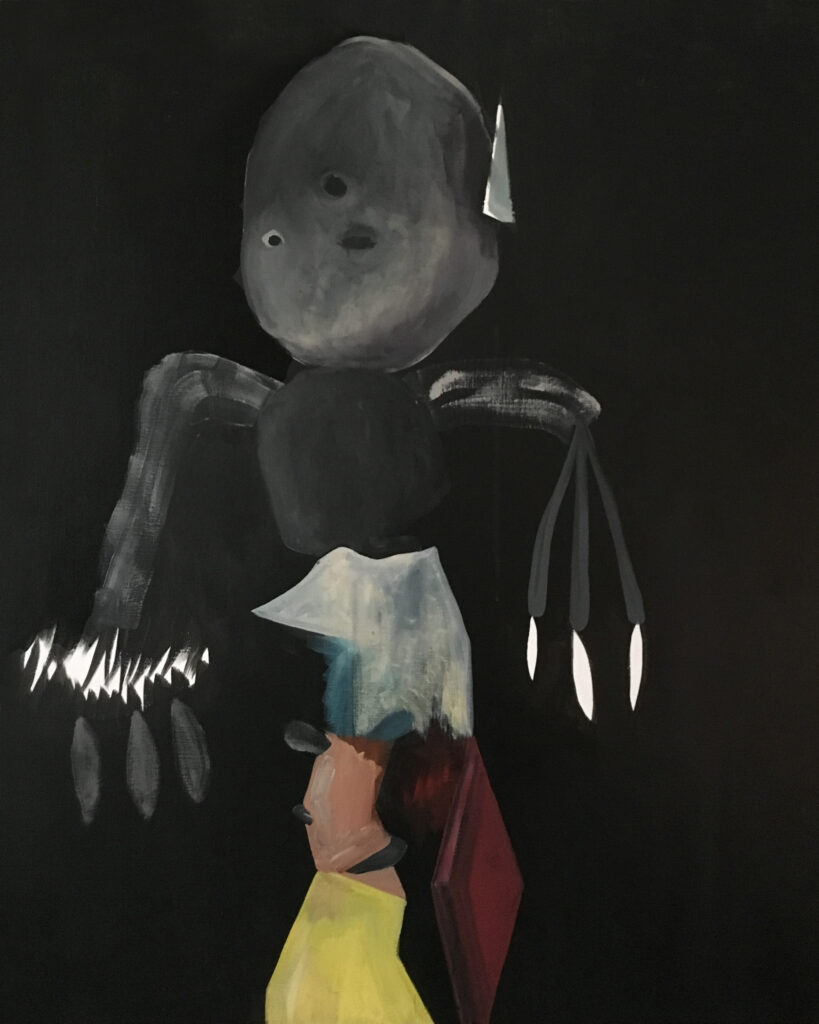
The materials she chooses transcend time and space, populating dreams, caressing and soothing bodies. During her childhood in Gabon, Myriam Mihindou forged an unbreakable bond with the liberating tree. In 2001, in Alexandria, she choreographed dualities in sculptures made of cotton, felt, kaolin, hemp, thread and needles (Angel and dark swan / L'ange et le cygne noir). More recently, cotton has given birth to nine sculpted wolf heads. Two new large-format cotton sculptures have been created in the artist's studio in recent months. Once again, the angel is present. He is a face that mingles with the bird, ready to take flight, although still suspended for a while from the painter's easel, to whom nature has given the gift of armfuls of cotton flowers. You have to know how to tame time to salute the ephemeral. Strata after strata of cotton fibers, mixed with titanium white, envelop the void and transform into volume. Light yet obeying the laws of gravity, like these upright legs, survivors, survivors. When wounds arise, it's customary to place a piece of cotton at the interface between the body and its environment, where the flesh opens up. Brushing against the epidermis, the cotton absorbs, soothes and heals. These multiplied envelopes form a sublime, carnal body. Myriam Mihindou combines her etymologies with this padded anatomy, continuing the work she began in 2006 on Langues secouées. The two volumes of the Dictionnaire historique de la langue française bear witness to this meticulous dissection of words and their meanings. Wrapped around themselves, the word and its definition are buried beneath the flesh. In traditional Ethiopian medicine, narrow strips of parchment studded with religious phrases and images are swaddled against oneself in a protective and therapeutic vow. Forging the verb, Myriam Mihindou summons the buried words that wound as well as heal. Her work is a vehicle for the spoken word.
Like cotton, soap skims the surface of bodies. Begun in 1999, the Fleurs de peau sculptural series has accompanied Myriam Mihindou to the places where she has settled in recent years, in Egypt, Morocco, Reunion and France. The blocks of Marseille soap have lost their angular contours. Curves emerge to suggest carnal volumes, or are stripped bare to take on an emaciated appearance. With a mimetic gesture, Myriam Mihindou embraces the action of time and the elements. All is metamorphosis in this alchemical relationship with nature: smooth or withered epidermis, pebbles polished by the sea, mineral concretions on the slopes of a volcano. These mad chimeras of natural remnants or bodily relics, sometimes pierced by needles, hang on the wall in a timeless game of jacks. Further on, other blocks of soap on a shelf bear letters on their faces, suggesting a playful pedagogy. The work was born of anger, and teaches us that sculpting is also a political act. If we obey the injunction of the material - wash, clean - will we make the cruel enumeration ginned up by the letters on the cubes disappear: «broken nose and lips»? For the artist, the prospect of this dissolution heralds a paradigm shift in relations of power and authority. There is an urgent need to abolish what are, in their natural state, merely differences, and which men erect as hierarchies. The material and the slow, unchanging gesture that glides across its surface produce a regenerative wave. Worlds crumble to give birth to new ones. From an imposing block of soap, the artist brings forth a few fossils, but oscillates in the face of a dilemma: the desire is strong to statufy the imprint as much as to reanimate the trace. In her sculptures, Myriam Mihindou digs the furrows of time and space where worlds are fomented.
Sarah Ligner
Curator at the Musée du Quai Branly