HOSTIE* unveils a more universal dimension in the career of Myriam Mihindou. The photographic, sculptural and installation work designed for this exhibition was developed, in part, on Reunion Island in August of 2016, following solitary walks on the sooty and volcanic soil of this French island that emerges from the Indian Ocean off the coast of Africa. Myriam Mihindou - who also does performance art - always reveals the cathartic and sacrificial or incantatory role of an artistic action, but also its restorative function.
The artist imagined HOSTIE while descending mountain peaks. She invests plastically in the temporality in which we exist, probing and questioning the present to reveal its true nature.
HOSTIE combines, in terms of catastrophic world events, Western and non-Western codes of representation. This syncretism complete, each of the artist's work becomes a “union” of nerve centres, crystallising a new state of consciousness or enlightenment.
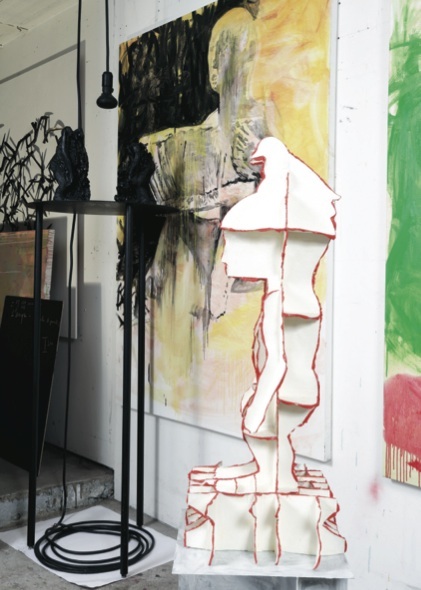
Whether it be sculptures of cotton, of wax, or etymologies - threads and etymologies collected from dictionaries sewn on paper – or photographed sculptures of flesh, reflecting on language has always held a special place in the work of Myriam Mihindou. This reflection affirms the permanence of a dialectic of the image where body and mind create a vibrational space in which the work is born and takes root.
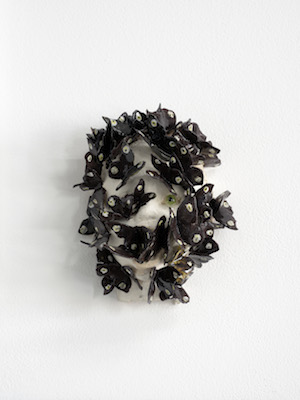
The contemporary vanities dialogue with the symbolic elements of an unprecedented iconography; sculptures forming new ex-votos, figures standing on the battlefields of time tested humanity. The embroidered face of death, indifferent, takes up dolls, condemning childhood, in other words the future. The benevolent figure of the savage, photographed with beaded hair covering the face, echoing sculpture Oviri by Paul Gauguin (1894) also embodies the spirit that watches over, recalling through its beneficially "archaic” shape in the sublime and Pasolinian sense the definition of time and of history that is by nature cyclical and evolutionary.
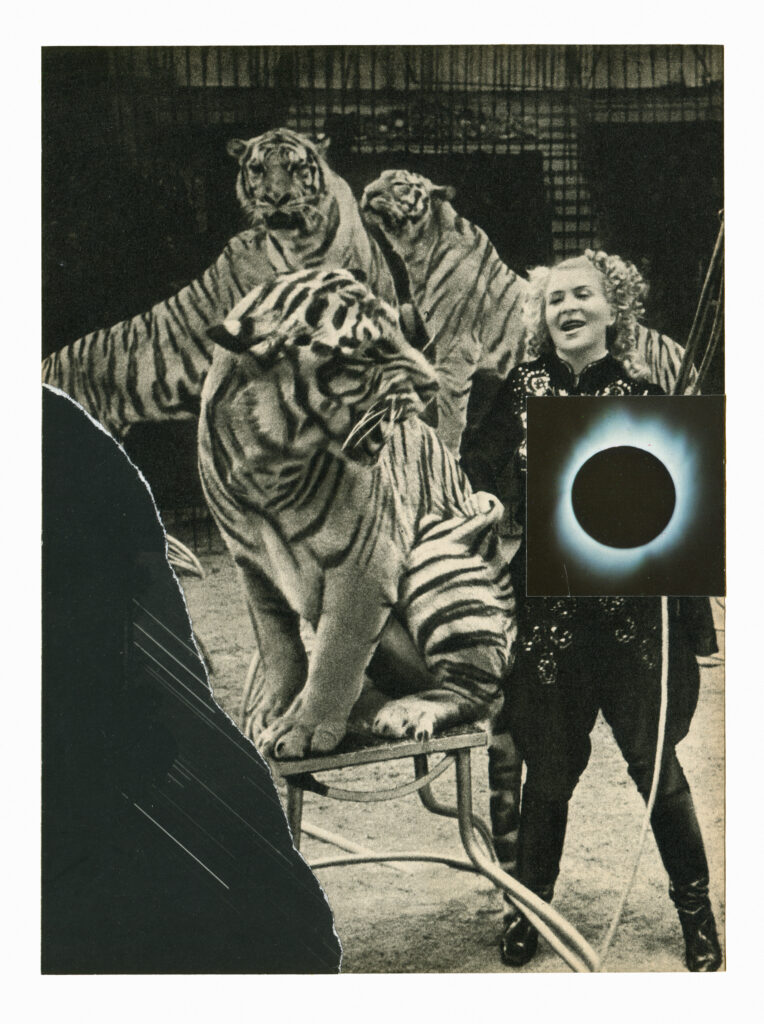
The series entitled Les Poilues (The Hairy) whose photographic framing recalls a story of engaged photography, coinciding with the birth of Magnum after World War II, features the role and active participation of women in the combats that are rocking the planet today. Previously assigned to await the uncertain return of the triumphant soldier (First World War), today they stand and decide themselves on their own engagement.
HOSTIE, by its name, beyond the extended visual richness forms an invitation. That of a universal communion, without power, without Christ and without a king. The wax and the candles of the still lifes - melted, falling, or fallen with horses overturned (La Ventre du cheval ) (The Belly of the horse) - specify the nature of the view taken by Myriam Mihindou on the consequences of a changing geopolitical or global situation where the question of meaning, itself, has strangely collapsed.
Charlotte Waligora