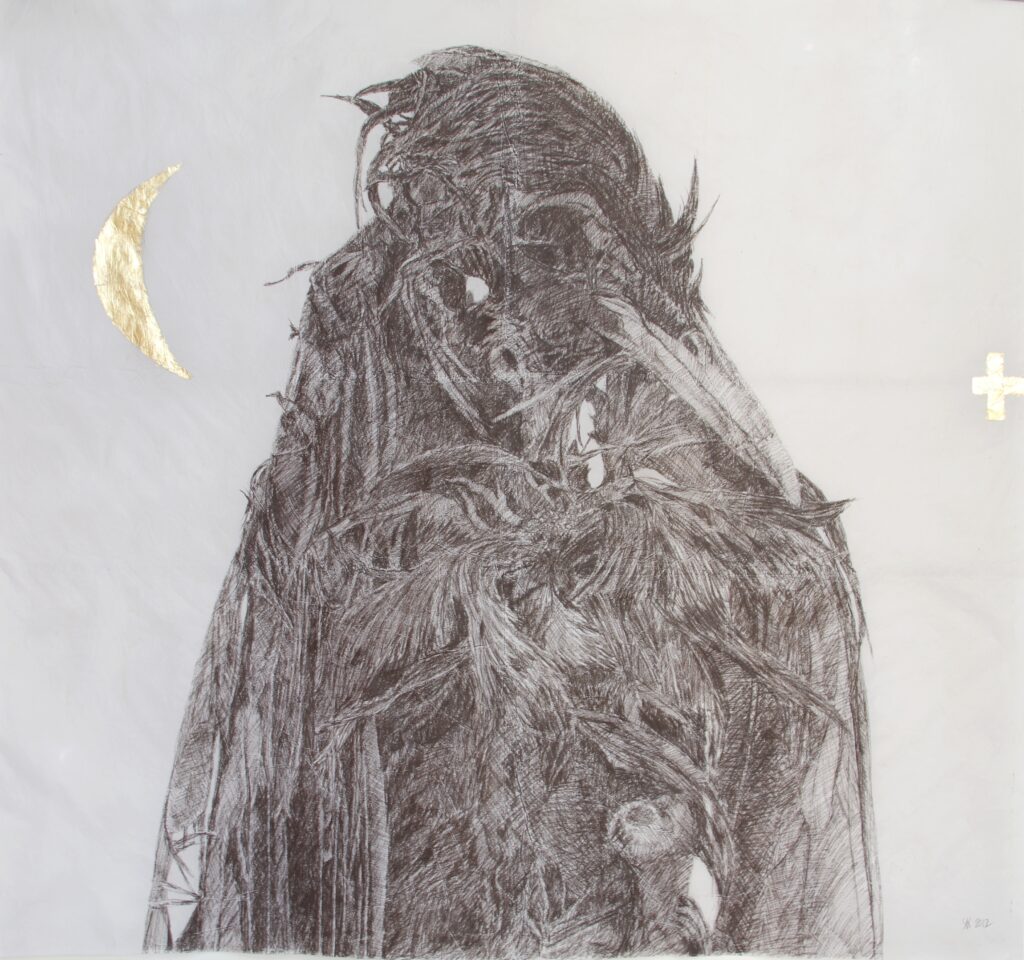
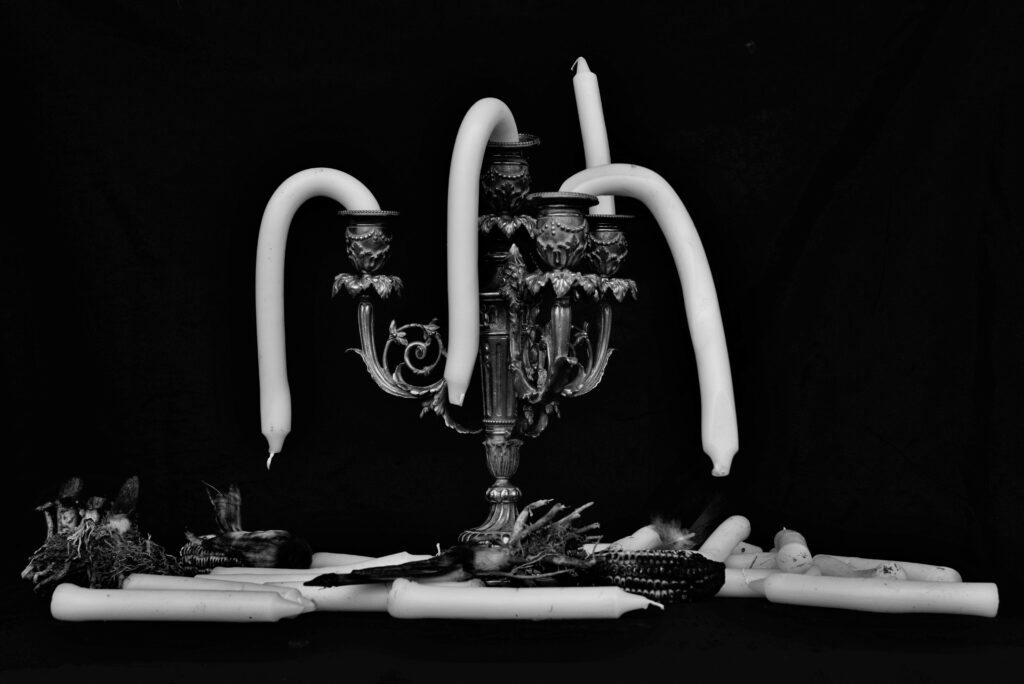
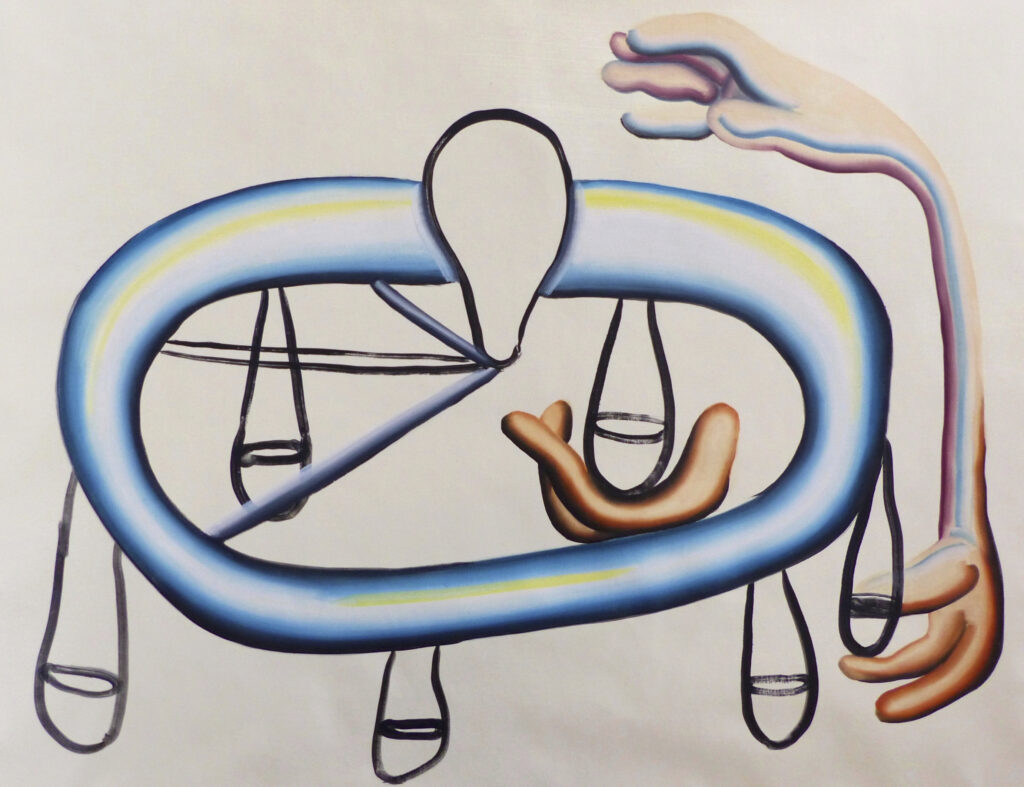
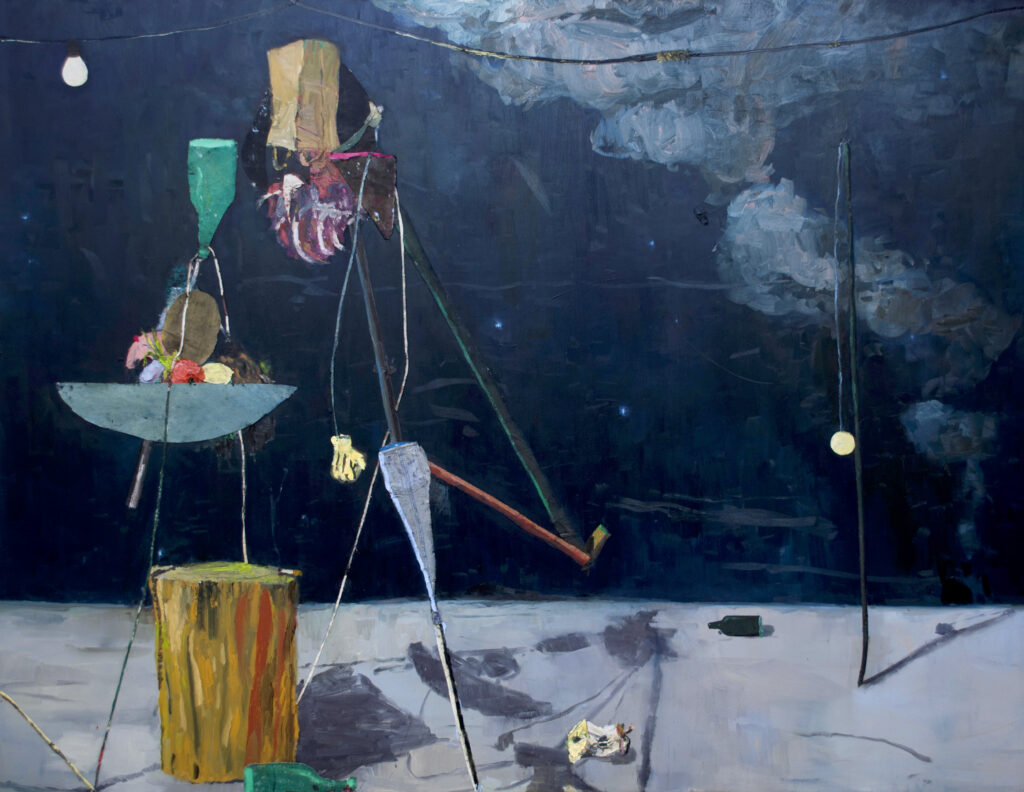
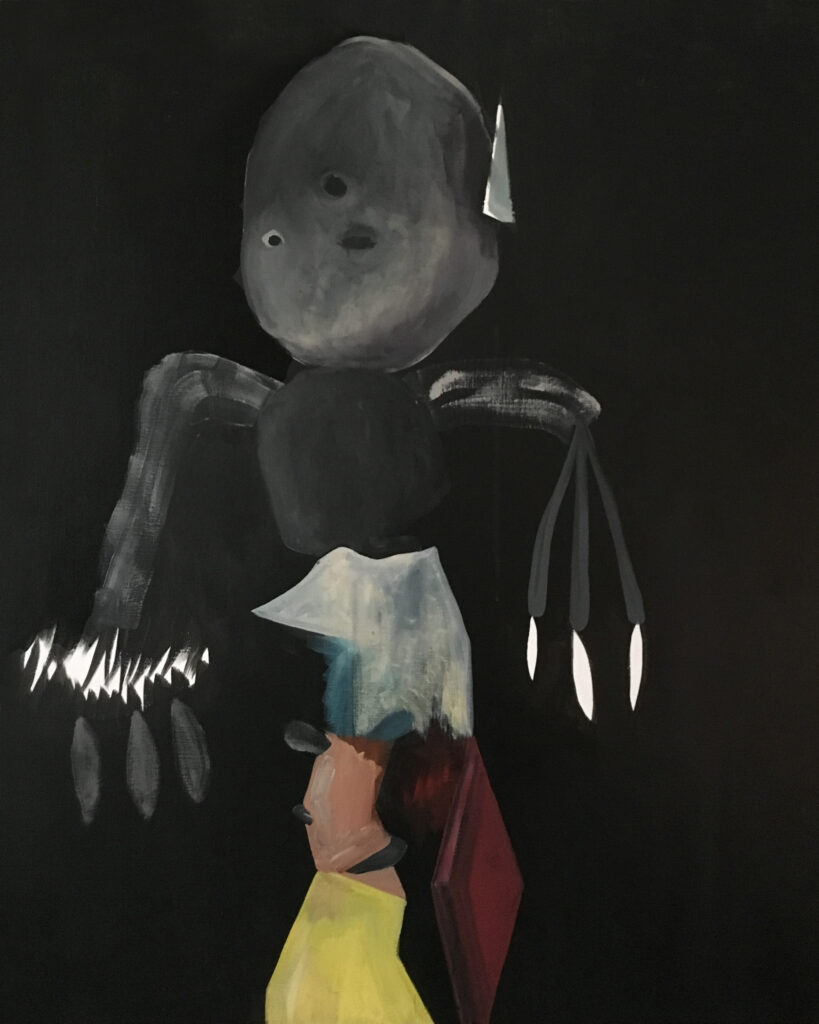
Maïa Muller is delighted to present Awakening of the somnambulist, Philip Grözinger's first solo exhibition in France.
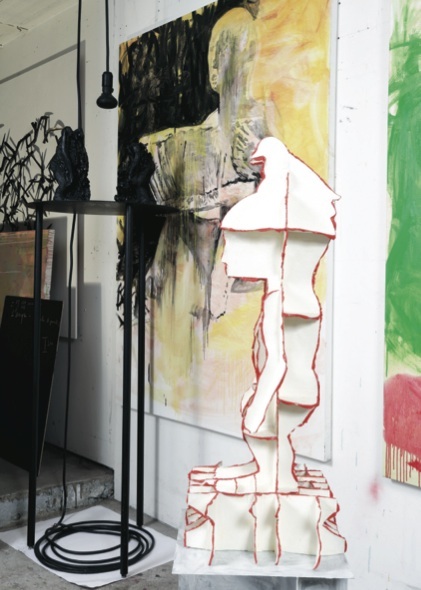
The 1950s and 1970s nurtured the most daring ideas on progress and the way it was bound to transform our everyday as we approached the year 2000 – visions of life on new planets where humans would move about in ultra-high-tech craft, have the ability to fly or benefit from powerful, liberating augmented bodies. The year 2000 eventually arrived, but the changes were not quite as dazzling as expected. The paintings of Philip Grözinger are simultaneously imbued with a sense of disappointment and disillusionment prompted by the end of utopias, and with hope and lucidity as regards the present age. They depict a world or society that doesn’t exist, a non-place or non-culture situated in an undefined temporality. Theirs is a world in which each individual has complete freedom over their body, choices and movements; a horizontal world, without hierarchy, norm or framework, through which the artist explores notions of utopia, dystopia and counter-utopia. Inspired by 1950s literature and science-fiction films, Grözinger operates in an interstitial timespace – between past and future, between earth and space, between rebirth and cataclysm, between the living and the machine, between genres and species. His work intertwines temporalities, geographies, bodies, cultures, reality and fiction to produce new situations, common places where humans and non-humans coexist and interact.1 These absurd and poetic situations give rise to a truly critical reflection on society, which forms part of the attempt to construct a ‘patterned vision of how to move and what to fear in the topography of an impossible but all-too-real present, in order to find an absent, but perhaps possible, other present.’2
Grözinger tries to strike a balance between these two dimensions, which he translates and materialises with great artistic freedom in his paintings: the stark colour contrasts, the conjunction of light and darkness, the speed of execution, the layered compositions, the variety of tools and mediums used (brushes, spray cans, acrylics, oil, etc.) imply a multiplicity of gestures and treatments. Grözinger’s formal decisions are born from emergency, from a feeling of excess and anxiety, which he aptly transposes onto the canvas. The oscillation between darkness and light is permanent, as though inextricable. According to the artist, he wants to convey a sense of hope. The hope of seeing the rise of freer, more tolerant and more peaceful societies that have emancipated themselves from the relationships of oppression and exploitation between supposedly dominant and dominated species. Yet the human and nonhuman figures in his images seem to be stuck in the product of their own making; they hybridise with machines while, conversely, the machines anthropomorphise. Grözinger’s works pose the question of physical mutation, but also of the destruction and reconstruction of the living. They represent fugitives, travellers, migrants – beings bereft of their identities, with bulging eyes, clownish faces or garish smiles, travelling aboard ships or rockets; beings in search of an elsewhere, of another planet. Grözinger thus takes a critical look at our productivist and consumerist societies, which promote excess and compulsive desires: ‘The preoccupation with productionism that has characterized so much parochial Western discourse and practice seems to have hypertrophied into something quite marvelous: the whole world is remade in the image of commodity production.’3 Between doomsday scenario and reconstruction, between the monstrous and the supernatural, Grözinger’s paintings present a damaged, disoriented, unpredictable, plastic, tropingworld.4
Julie Crenn
The words in italics are borrowed from Donna Haraway.
2 HARAWAY, Donna, «The Promises of Monsters: Regenerative Policies for Unfit/Unappropriated Others», in DORLIN, RODRIGUEZ. Penser avec Donna Haraway, Paris: PUF, 2012, p.159-160.
3 Ibid. p.164.
4« Nature is also a tropos, a trope. It is a figure, a construction, an artifact, a movement, a displacement. [...] True to the Greek tropos, nature refers to that which turns. By «troping», we orient nature as we do the Earth, the geotropic, physiotropic raw material.» (HARAWAY, 2012, p.162 - 163)