«The world is but a perennial wobble. The earth, the rocks of the Caucasus, the pyramids of Egypt: And of public wobble, and of their own. Even constancy is nothing but a more languid wobble. I cannot assure my object. He goes troubled and wavering, with a natural drunkenness. I take him at this point, as he is, the moment I amuse myself with him. [...]. My story must be adapted to the moment. I may change, not only in fortune, but also in intention. It's a contrerolle of various and mutable accidents, and of irresolute imaginations. And when it fails, contraries: Either I am other myself: Or I grasp the subjects, by other circumstances, and considerations.» Montaigne, «Du Repentir», Essais III, 2 1
.
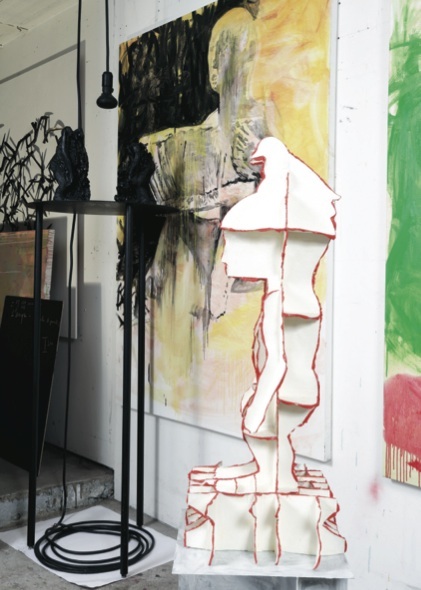
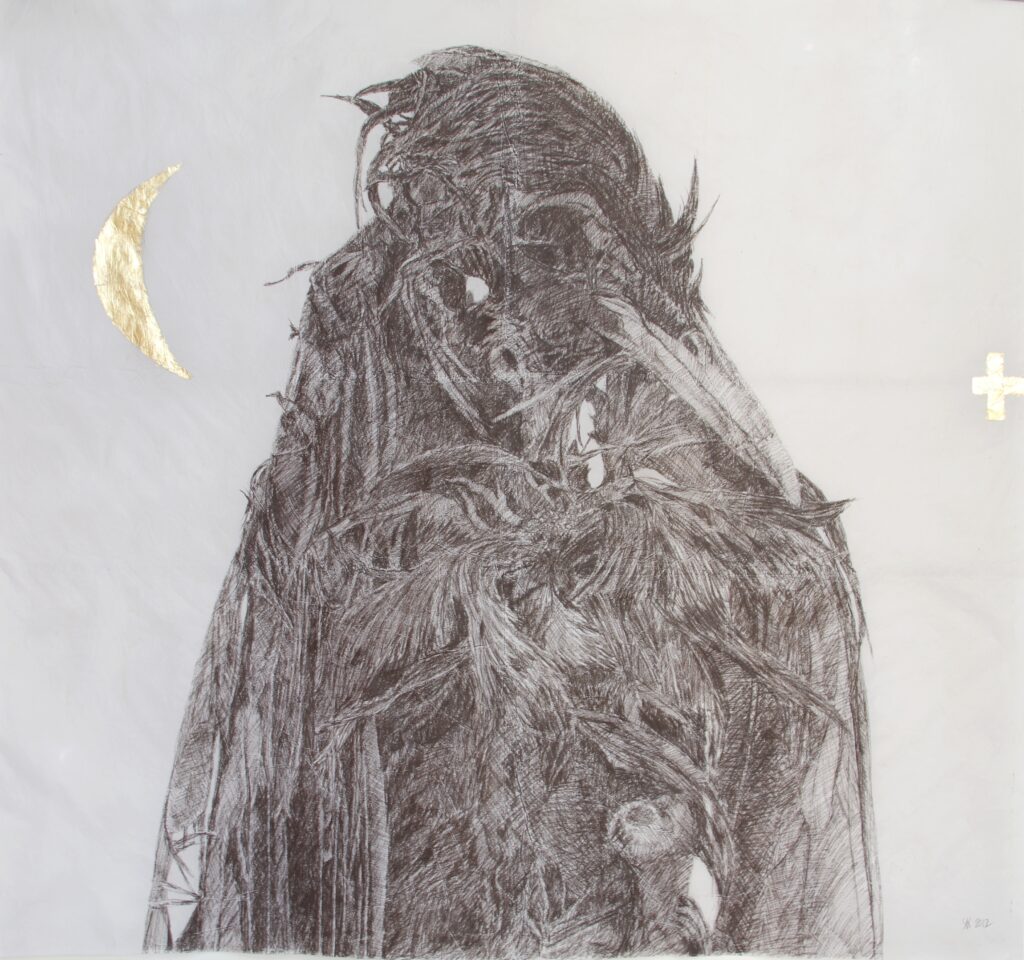
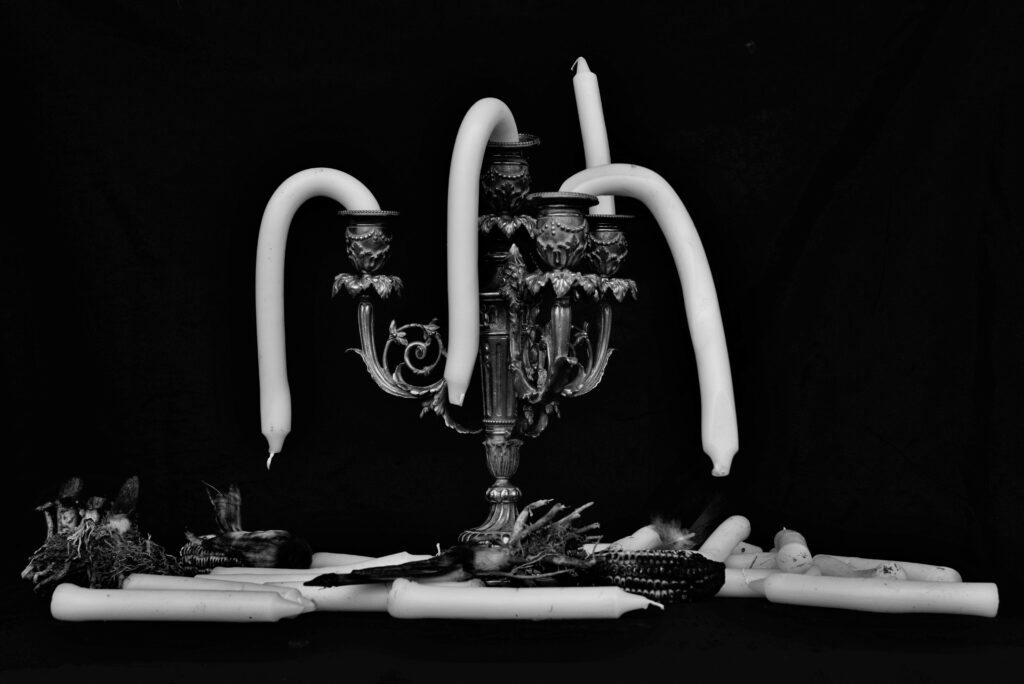
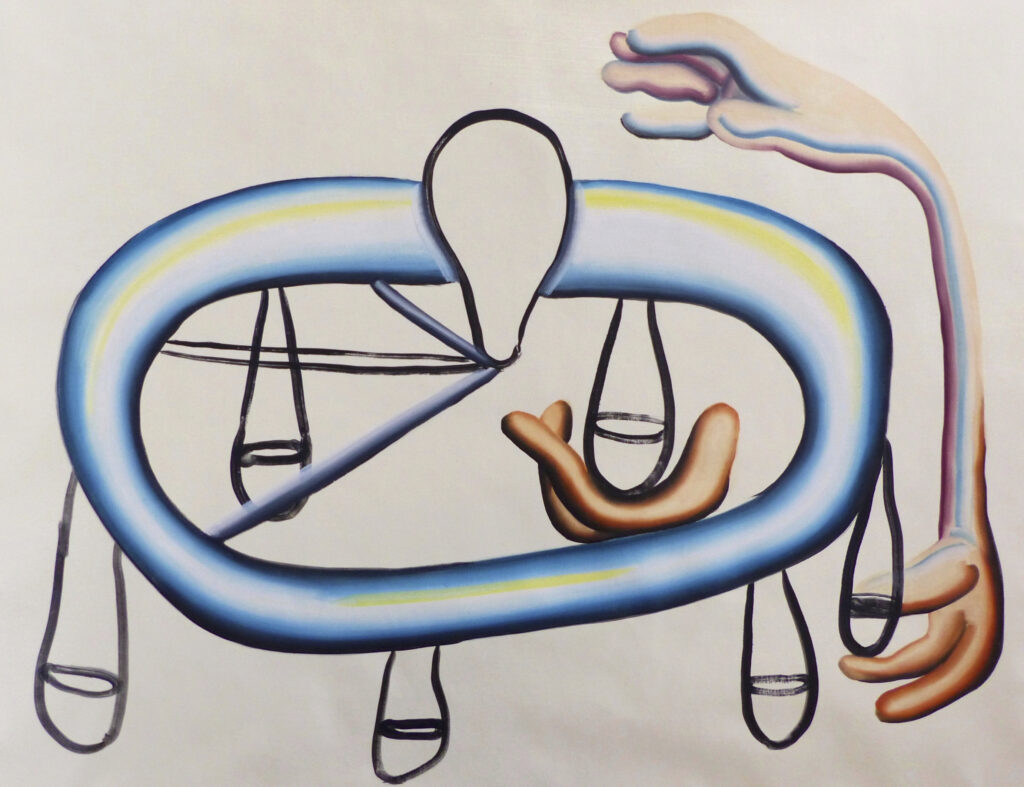
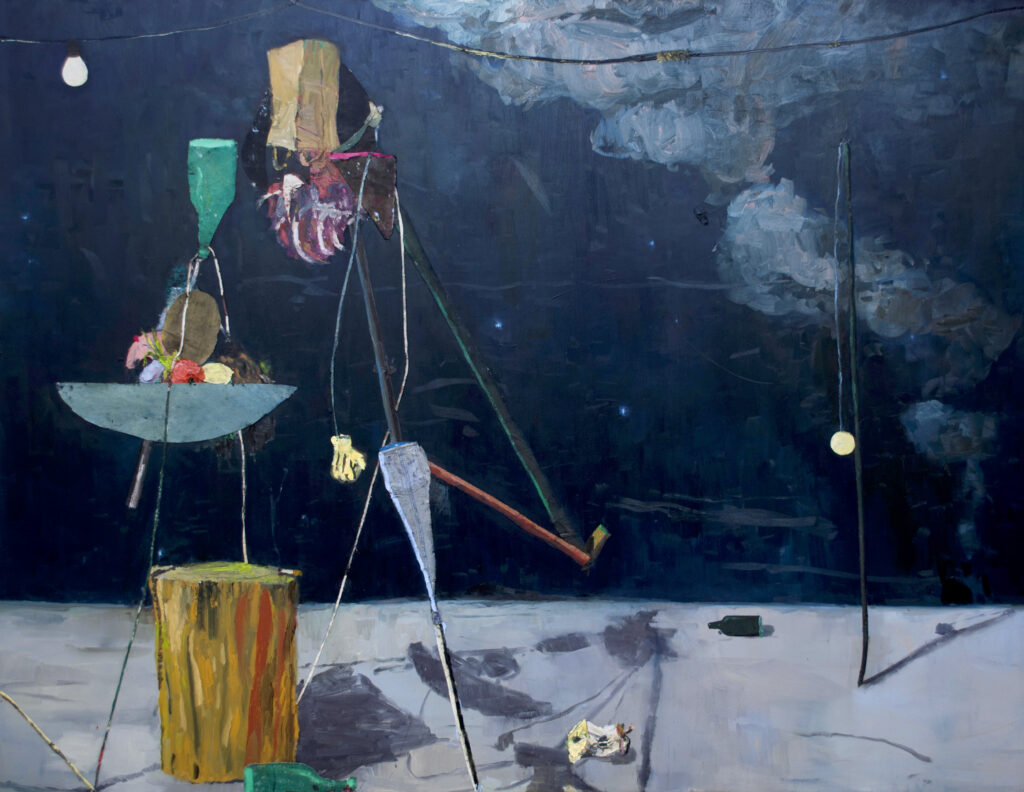
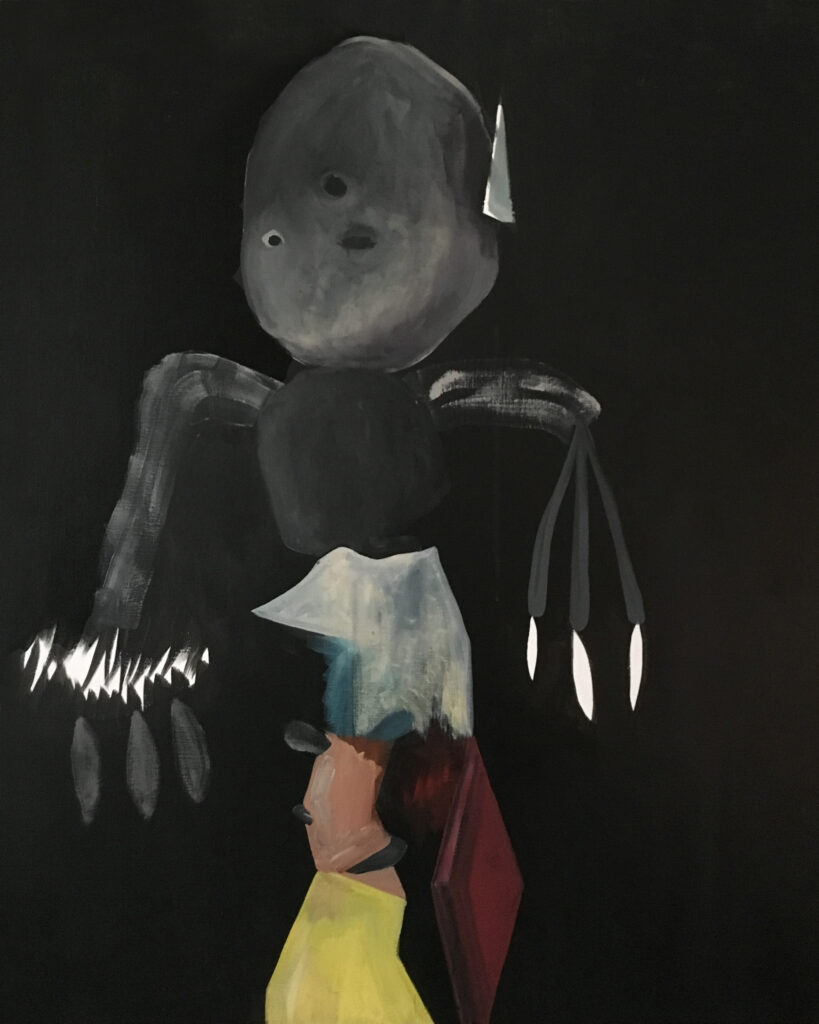
Troubled and unsteady, the beings painted by Vincent Bizien make do with the threshold offered by the canvas or sheet of paper. The gap offers a haven for their marginal wanderings. Where do these beings drag their carcasses? Neither entirely flesh, nor entirely dream, they are half-breeds of realities seen, glimpsed, perceived, disappointed. Mister Nobody has been wandering through the artist's works for several years. Idiot, the label sticks to him, but it's a remedy for not reflecting himself in society's murky mirror. «His wandering is not easy, his arms swinging, at his sides or stretched forward like a zombie, his hair massive and primitive. Mr Nobody is perfect.» 2. With his avatars, he continues his wanderings through Vincent Bizien's recent canvases. A nameless creature, she has spawned a gentle offspring of ghostly beings. Through drawing and painting, the artist establishes a tête-à-tête that allows such protagonists to appear. Seized in the swiftness of their appearance, they sometimes slip away, disappear and metamorphose under the brush, as time goes by, in palimpsest canvases. When the denouement comes, the work tends towards completion. Then the wandering being has found a home in the work. But what is the canvas called? Mister Nodoby's avatars eclipse identities in favor of neutral pronouns. They are by no means impersonal. Vincent Bizien describes his work as subjective realism. He doesn't reproduce the contours of a living model within an ordered world: he skirts the lines and joins the silhouettes on the margins, where seemingly nothing but chaos reigns, and yet where more than an ounce of humanity remains. Is he not an ex-centric artist «who has located the center of everything outside all the circles where what we call a «center» might exist «3? Eccentricity has been present in art since the lives of artists written by Giorgio Vasari in the mid-sixteenth century. Art historian Daniel Arasse brings it back to the painted surface in a masterly study of the paintings of Piero di Cosimo, an artist of the late Quattrocento. He discerns in them »a way of not entering into this game of belles manières, where the erasure of passions also authorizes all betrayals, all deceptions "4. Vincent Bizien shatters the politeness of painting. He extracts the juice of emotional states. Yet this is not a spectacle of cruelty, as Antonin Artaud wished the theater to be. One figure appears melancholy, another almost mischievous, another lost, even grotesque, tragi-comic, and sometimes downright sinister. Figures with excrescences, figures concealed beneath appendages, some remain suspended, uncertain, while others, warriors, hesitate over the battle to be waged. Gesture is evacuated into a fingertip detail, halfway between the melancholy of Titian's Man with a Glove and the mittens in which Mickey and Minnie hide their claws to make themselves less mousey. The subjects painted by Vincent Bizien revel in this collusion of allusive references: a painting by Piero della Francesca, a horror film, a Portishead song... Drawn into the poetic wake, sensitive to the slightest setback, the work delivers the coup de grâce to our world that never ceases to falter.
1 Edited by Emmanuel Naya, Delphine Reguig-Naya and Alexandre Tarrête, Folio classique, 2009.
2 Vincent Bizien, «A Wasteland in Occidence», Animal populaire, galerie Maïa Muller, 2015.
3 Alain Jouffroy, Piero di Cosimo ou la forêt sacrilège, Paris, Robert Laffont, 1982.
4 Daniel Arasse, «Piero di Cosimo, l'excentrique», Le sujet dans le tableau, Paris, Flammarion, 1997
Sarah Ligner
Curator at the Musée du Quai Branly -Jacques Chirac
Head of the Historical and Contemporary Globalization Heritage Unit